The School Security Assessment Is Done. What Happens Next?
A school security assessment is only the first step. Turning findings into meaningful safety improvements requires clear priorities, accountability, and follow-through.
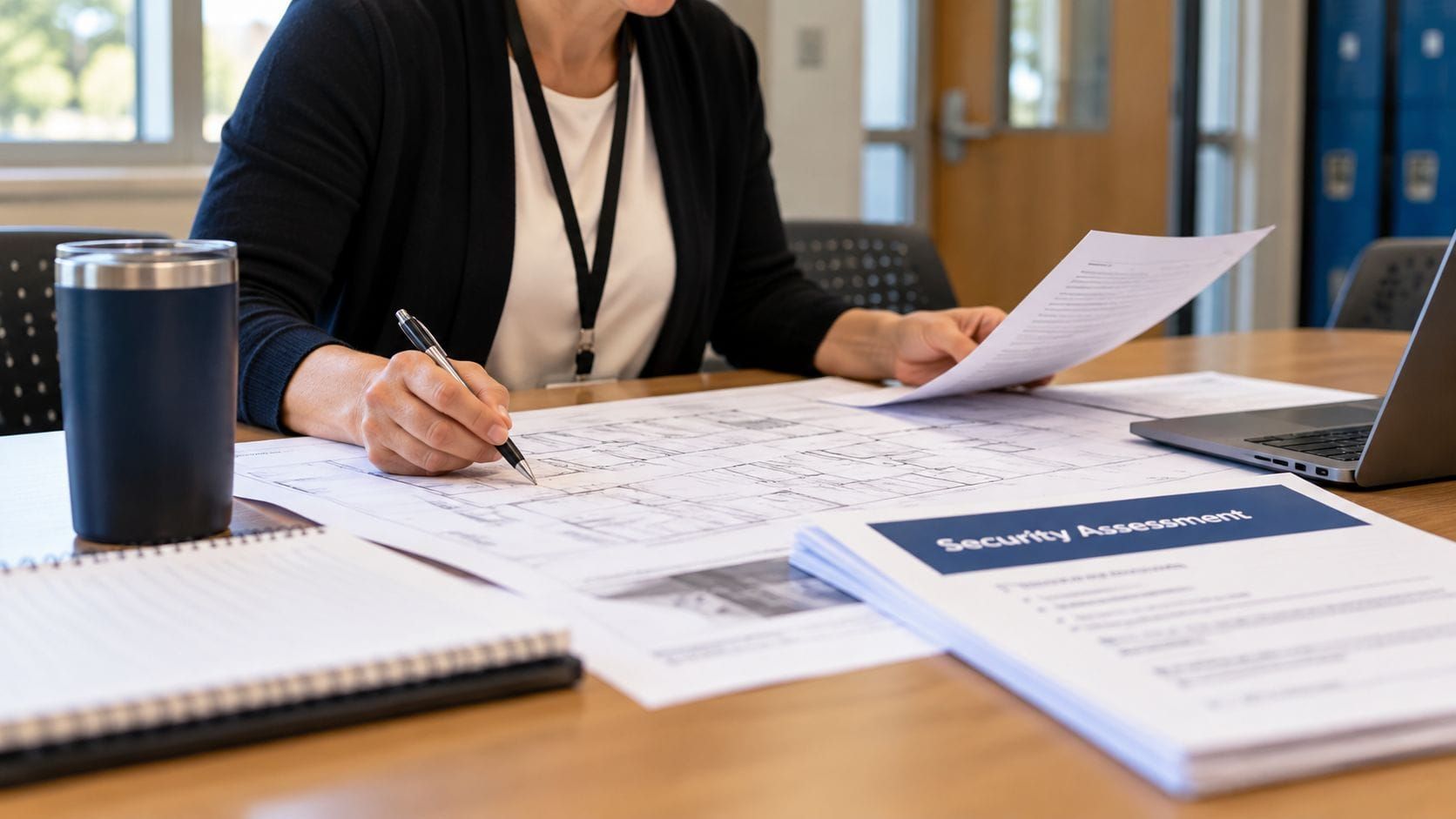
A school can spend weeks preparing for a security assessment. People walk the campus, look at doors and cameras, review emergency procedures, and talk with staff. Then the final report arrives. It might be 30 pages or 100 pages, with plenty of findings and recommendations.
And then what?
That’s the part I think deserves more attention. A good assessment is valuable. But a report sitting on somebody’s desk doesn’t make a school safer. What matters is what school leadership does after receiving it.
I’ve spent more than 25 years in the physical security industry, working on the sales and leadership side. One thing I’ve learned is that buying a solution and solving a problem are not always the same thing. Schools have to make sure the people, procedures, and equipment work together. That takes follow-through.
Figure Out What Matters Most
Most schools don’t have unlimited budgets or extra staff waiting around for another project. If an assessment turns up 25 recommendations, it’s probably unrealistic to tackle all 25 at once.
The first step is to sort them out. Which findings could put students or staff at the greatest risk? Which ones can be corrected quickly? Which ones require money, planning, or board approval?
Say an assessment finds a classroom door that doesn’t lock reliably. That deserves immediate attention. A recommendation to replace a working camera system might be worth considering, but it may not carry the same urgency.
I’d put the findings into three practical groups: address now, plan and budget for, and monitor. That gives everyone a place to start and helps keep important items from getting buried behind less urgent projects.
And don’t assume every improvement requires a large purchase. Sometimes a change in how visitors enter the building, how doors are checked, or how staff communicate can make a real difference.
Put a Name Beside Every Recommendation
Here’s where a lot of good intentions can stall. Everyone agrees a recommendation is important, but nobody is quite sure who owns it.
For example, an assessment may call for better exterior-door procedures. Facilities might handle the hardware, administrators might set the rules, and teachers and staff might be expected to follow them. If responsibility is left with “the school,” chances are the recommendation will drift.
Each action needs one person who is accountable for seeing it through. That person can work with several departments, but somebody has to track progress, raise problems, and confirm the job is done.
The tracking system doesn’t need to be fancy. A simple spreadsheet can work. List the issue, its priority, the person responsible, the target date, and how completion will be verified. Review it regularly with the people who can make decisions.
The point isn’t to create more paperwork. It’s to keep the work moving.
RELATED RESOURCE
PASS Offers Free Digital Checklists for School Safety Assessments
Get the Right People Involved
School security reaches well beyond whoever has “security” in their job title. Principals, district leadership, facilities teams, technology staff, transportation, teachers, and local first responders may all have a part to play.
Think about an emergency notification system. Technology may be responsible for keeping it running, but somebody needs authority to send an alert. Staff need to know what the messages mean. Administrators need a backup plan if the usual decision-maker is unavailable.
If any one of those pieces is missing, the system may not work as intended.
That’s why I believe school leaders should review major assessment findings together, rather than handing the report to one person and assuming everything is covered. The conversations should be direct: What have we fixed? What is holding us up? Who needs to make the next decision?
Don’t Stop at 'Completed'
This may be the most important point: checking a box doesn’t prove a recommendation worked.
A school might update its lockdown procedure and distribute the new plan. That’s progress. But do employees know what to do? Does the plan account for substitute teachers? Is someone prepared to take charge if the principal is away?
You find answers by testing, not guessing.
Tabletop exercises are a practical starting point. Bring the right people into a room, walk through a realistic scenario, and ask what each person would actually do. You may discover gaps in communication, unclear responsibilities, or a step that sounds good on paper but won’t work during a busy school day.
Technology needs testing, too. If a new alert system is installed, confirm that it reaches the right people. If a door problem was corrected, check that the door operates as intended during normal use.
Exercises and drills should be age-appropriate, clearly communicated, and consistent with state requirements. The goal is to build confidence and readiness, not create fear.
Follow Up on What Testing Reveals
No test is useful if the results are forgotten.
Let’s say a communications exercise shows that an alert can’t be heard in one part of a building. Somebody needs to document the issue, assign a fix, and test again after the work is done.
The same goes for problems with visitor procedures, emergency contact information, reunification plans, or staff responsibilities. Every new gap should go back onto the action list.
This is also important when leadership changes. A superintendent, principal, or facilities director may leave, but the school still needs a clear record of what was identified, what was corrected, and what remains open.
Good documentation is less about protecting a file and more about protecting continuity.
Keep It Going
School safety is not a one-time project. Staff changes. Buildings change. Students and routines change. A procedure that worked last year may not fit the way the school operates today.
That doesn’t mean schools need a major assessment every few months. It means leadership should make security follow-up part of normal operations. Check high-priority items. Review changes that affect safety. Look at what drills and exercises are telling you. Make adjustments.
At the end of the day, the best security program isn’t necessarily the one with the biggest budget or the newest equipment. It’s the one where people understand the plan, know their responsibilities, and follow through when something needs fixing.
A security assessment tells you where you stand. The real work starts when the report is delivered.
The measure of success isn’t how many recommendations are written down. It’s how many meaningful improvements actually make it into the school day.
This article is contributed by David Hohne, Vice President of Sales at M6 Global Defense, a physical security consulting firm that provides independent security assessments, planning, and advisory services to schools and other organizations.
Note: The views expressed by guest contributors are those of the authors and do not necessarily represent the views of, and should not be attributed to, School Security Leadership.