Topic Hub: Behavioral Threat Assessment in K-12 Schools
Everything you need to stay informed about behavioral threat assessment and management (BTAM) in K-12 schools, with articles, research, practitioner insights, best practices, and free resources all in one place.

Published Aug. 8, 2026 | Last updated Oct. 8, 2026
This resource draws on School Security Leadership's original reporting, practitioner interviews, National Council of School Safety Directors (NCSSD) discussions, webinars, and research from leading organizations in school safety and violence prevention.
Behavioral threat assessment and management (BTAM) has become one of the most important components of comprehensive school safety and violence prevention. While often associated with school shootings, its purpose is much broader. At its core, behavioral threat assessment helps schools identify concerning behavior, understand what may be driving it, and connect students with the support and interventions they need before situations escalate.
Through interviews with school safety leaders, coverage of new research, and discussions during ZeroNow webinars and NCSSD roundtables, School Security Leadership has explored how schools are implementing behavioral threat assessment and management (BTAM) programs. One message has emerged consistently: behavioral threat assessment is about helping students, not labeling them. Most students referred to a threat assessment team never go on to commit targeted violence. Instead, the process often identifies students who are struggling with bullying, mental health concerns, family stress, suicidal thoughts, or other challenges and connects them with appropriate supports.
Research has consistently shown that individuals who carry out targeted acts of school violence often exhibit observable warning signs before an attack. These findings have helped shape today's behavioral threat assessment models, which emphasize recognizing concerning behaviors early, gathering information, evaluating behaviors within their broader context, and developing interventions that reduce risk while improving student well-being.
This resource brings together those insights, along with practical resources and research, to help school safety leaders better understand and strengthen their BTAM programs.
This page combines a comprehensive overview of behavioral threat assessment with School Security Leadership's growing collection of related research, practitioner insights, webinars, policy coverage, and case studies. New resources will be added as they are published.
📖 Jump to a Section
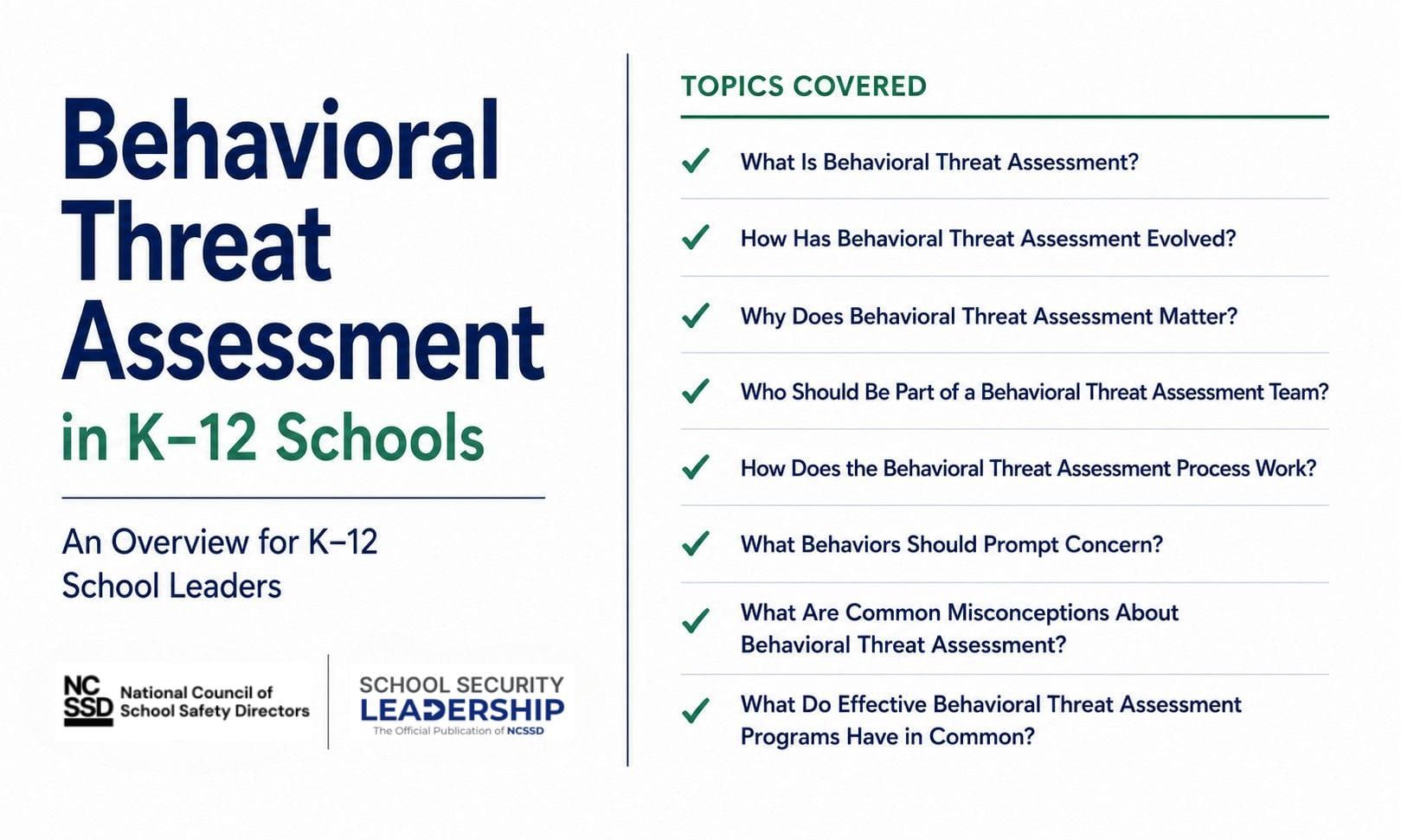
- What Is Behavioral Threat Assessment?
- How Has Behavioral Threat Assessment Evolved?
- Why Does Behavioral Threat Assessment Matter?
- Who Should Be Part of a Behavioral Threat Assessment Team?
- How Does the Behavioral Threat Assessment Process Work?
- What Behaviors Should Prompt Concern?
- What Are Common Misconceptions About Behavioral Threat Assessment?
- What Do Effective Behavioral Threat Assessment Programs Have in Common?
📂 Browse BTAM Resources
What Is Behavioral Threat Assessment?
Behavioral Threat Assessment and Management (BTAM) is a structured, multidisciplinary process used to identify, assess, and manage behaviors that may indicate a person is at risk of harming themselves or others. Rather than attempting to predict who will become violent based on personality traits, demographics, or other characteristics, BTAM focuses on observable behaviors and the context surrounding those behaviors.
The goal is not to predict violence or determine whether a student is "dangerous." Instead, the process helps multidisciplinary teams evaluate concerns, determine the appropriate level of response, and connect students with interventions and supports that address underlying needs. In many cases, those supports include counseling, mental health services, academic assistance, family engagement, or other resources.
How Has Behavioral Threat Assessment Evolved?
Although behavioral threat assessment is now widely used in K-12 schools, the approach did not originate in education. According to researchers with the U.S. Secret Service National Threat Assessment Center (NTAC), behavioral threat assessment was first developed in the early 1990s to help protect public officials by assessing behaviors associated with targeted violence instead of relying on profiles or assumptions about who might become violent.
Following the 1999 Columbine High School shooting, the U.S. Secret Service partnered with the U.S. Department of Education to study school attacks and adapt the approach for K-12 schools. Their research found that individuals who carried out targeted school violence often displayed observable behaviors before an attack, helping shape today's multidisciplinary, prevention-focused behavioral threat assessment process.
Today, behavioral threat assessment has become a widely adopted school safety practice. According to NTAC, 39 states either require or encourage behavioral threat assessment through law or policy, and approximately 85% of U.S. public schools report having a behavioral threat assessment team.
How Do Behavioral Threat Assessment Requirements Vary by State?
While behavioral threat assessment has become increasingly common in K-12 schools, requirements vary significantly by state. Some states mandate multidisciplinary threat assessment teams, while others address BTAM through regulations, guidance, or recommended practices.
Safe and Sound Schools has compiled a state-by-state resource examining these differences using state statutes, regulations, and materials from state education departments and school safety centers. The tracker was last updated in August 2026.
Why Does Behavioral Threat Assessment Matter?
Behavioral threat assessment has become an increasingly important component of comprehensive school safety because it gives schools a proactive way to recognize concerns, intervene early, and connect students with appropriate supports before situations escalate into violence or other crises. Rather than waiting until a student commits a serious disciplinary violation or criminal act, BTAM encourages schools to recognize warning signs early, gather information, assess risk, and determine what interventions or supports may be appropriate.
For many schools, this represents a shift from reactive crisis response to proactive violence prevention. Instead of asking, "How do we respond after something happens?" behavioral threat assessment asks, "How can we recognize concerns early enough to provide support and reduce the likelihood of a crisis?"
What Does Research Tell Us About School Violence?
Research from NTAC, The Violence Project, RAND, and other organizations has informed many of today's behavioral threat assessment practices. Several findings have emerged consistently across that body of research.
- Targeted acts of school violence are rarely impulsive. Many attackers exhibit observable warning signs before an attack.
- No single behavior predicts violence. Threat assessment focuses on patterns of behavior and context rather than profiles or stereotypes.
- Information sharing is essential. Multidisciplinary teams are better equipped to evaluate concerns than any one individual acting alone.
- Early intervention can reduce risk. Connecting students with appropriate supports before a crisis develops is a central goal of behavioral threat assessment.
“Threat assessment is not a black mark on a student, and it should not be viewed as punitive.”
Who Should Be Part of a Behavioral Threat Assessment Team?
One of the defining characteristics of behavioral threat assessment is that no single person is expected to make decisions alone. Unlike traditional disciplinary investigations, behavioral threat assessment relies on a multidisciplinary team that brings together professionals with different expertise to better understand a student's circumstances, evaluate concerning behaviors, and determine appropriate interventions.
Each team member contributes a different perspective. While the exact composition varies by district, behavioral threat assessment teams typically include school administrators, teachers, school counselors, school psychologists, social workers, school safety personnel, and school resource officers or other law enforcement partners when appropriate. Depending on the situation, school nurses, special education staff, district administrators, or other specialists may also participate. Bringing those perspectives together helps teams make decisions based on a more complete understanding of the student's circumstances rather than isolated observations.
Team composition may vary based on district structure, available resources, and the circumstances of an individual case.
How Does the Behavioral Threat Assessment Process Work?
While every district's procedures differ, behavioral threat assessment generally follows a structured process designed to help schools understand concerning behaviors, assess the level of concern, develop appropriate interventions, and monitor progress over time.
1. Concerning Behavior Is Identified
The process begins when a student, staff member, parent, or community member reports a concerning behavior or when school personnel observe behaviors that warrant additional attention. Concerns may involve direct or indirect threats, significant behavioral changes, concerning communications, social media activity, or other behaviors that raise questions about a student's well-being or potential risk.
2. Information Is Gathered
Rather than making decisions based on a single report or observation, the threat assessment team gathers information from multiple sources. This may include interviews with staff, students, or parents; reviews of school records; observations of the student's behavior; and, when appropriate, information from law enforcement or community mental health partners. The goal is to understand the full context surrounding the behavior.
Gathering Better Information Through Interviews
Interviews are often an important part of the information-gathering process, but the quality of the assessment depends in part on how those conversations are conducted. Practitioners emphasize avoiding early conclusions, using open-ended questions, listening carefully, and giving students an opportunity to explain events in their own words before drawing conclusions.
The goal of a behavioral threat assessment interview is not to obtain a confession or determine whether a student is dangerous. It is to gather reliable information that helps the multidisciplinary team better understand the student's behavior, thinking, circumstances, and current level of concern.
3. The Threat Assessment Team Evaluates the Situation
Using the information collected, the multidisciplinary team evaluates the student's circumstances, considers possible risk factors and protective factors, and determines the level of concern. Rather than attempting to predict violence, the team seeks to understand what may be driving the behavior and what interventions may be appropriate.
4. Interventions and Supports Are Developed
Based on the assessment, the team develops a plan to address the identified concerns. Depending on the situation, interventions may include counseling, mental health services, academic support, conflict resolution, family engagement, safety planning, increased supervision, or referrals to community resources.
5. Ongoing Management, Monitoring, and Follow-Up
Behavioral threat assessment is not a one-time event. The team continues to monitor the student's progress, reassesses the situation as new information becomes available, and adjusts interventions as needed. Depending on the circumstances, ongoing management may also require coordination among the school, family, mental health providers, law enforcement, and other community partners. Continued communication can help ensure supports remain appropriate as a student's circumstances or behavior change over time.
What Behaviors Should Prompt Concern?
No single behavior indicates that a student is planning violence. Instead, teams evaluate patterns of behavior, changes over time, and the surrounding context. Many concerning behaviors have explanations unrelated to violence, which is why gathering information and involving a multidisciplinary team is so important.
While every situation is unique, research has identified several categories of behaviors that may warrant additional assessment, particularly when they occur in combination or represent a significant change from a student's typical behavior.
The following examples reflect recurring themes identified in behavioral threat assessment research and should always be considered within the broader context of a student's circumstances.
- Significant changes in behavior or functioning
- Concerning communications or threats
- Escalating grievances or fixation
- "Leakage," or communicating violent intentions to others
- Major life stressors or personal crises
- Suicidal thoughts or behaviors
- Bullying, victimization, or social isolation
While the presence of one or more of these behaviors does not mean a student will become violent, they may indicate that additional information should be gathered to better understand the situation.
What Are Common Misconceptions About Behavioral Threat Assessment?
Despite becoming a widely adopted violence prevention strategy, behavioral threat assessment is still frequently misunderstood. School Security Leadership has heard many of the same misconceptions addressed by researchers, practitioners, and NCSSD members. Here are some of the most common.
Myth #1: Behavioral threat assessment is designed to predict who will commit violence.
Reality: Behavioral threat assessment is not about predicting the future. It provides a structured process for evaluating concerning behaviors, gathering information, understanding the context surrounding those behaviors, and determining appropriate interventions. The goal is to reduce risk by recognizing concerns early and connecting students with appropriate supports before situations escalate.
Myth #2: Students referred to a threat assessment team are dangerous.
Reality: Most students referred to a behavioral threat assessment team never engage in targeted violence. Many referrals identify students experiencing bullying, mental health concerns, family stress, suicidal thoughts, social isolation, or other challenges that require additional support. As ZeroNow webinar presenter Jillian Herring emphasized, behavioral threat assessment is intended to understand concerns and connect students with resources—not to label or punish them.
“Parents, students, and staff need to understand that behavioral threat assessment is fundamentally a preventative process.”
School safety consultant and former Broward County Public Schools administrator
Myth #3: Behavioral threat assessment replaces school discipline.
Reality: Behavioral threat assessment serves a different purpose than disciplinary investigations. While a student may also be subject to disciplinary action depending on the circumstances, the threat assessment process focuses on understanding behaviors, evaluating risk, and determining interventions that address underlying concerns and improve safety.
Myth #4: A single person should decide whether a student poses a threat.
Reality: One of the defining characteristics of behavioral threat assessment is its multidisciplinary approach. Administrators, counselors, psychologists, school safety personnel, school resource officers, teachers, nurses, and other professionals each contribute different information and perspectives. Bringing those perspectives together helps teams make more informed decisions than any one individual could make alone.
Myth #5: Every concerning behavior means a student is planning an attack.
Reality: Behavioral threat assessment does not assume that every concerning behavior indicates violent intent. Instead, teams evaluate behaviors within their broader context, gather additional information, and determine whether interventions, supports, or continued monitoring are appropriate. Many behaviors have explanations unrelated to violence, which is why context and collaboration are central to the process.
What Do Effective Behavioral Threat Assessment Programs Have in Common?
Effective behavioral threat assessment programs depend on more than written policies or established teams. Through School Security Leadership's reporting, NCSSD member discussions, and practitioner webinars, several common themes have consistently emerged.
They Practice the Process
Effective behavioral threat assessment programs treat BTAM as an ongoing practice. Teams benefit from periodically reviewing procedures, discussing scenarios, and clarifying individual roles before a real situation occurs.
“The same way we conduct lockdown drills and evacuation drills, we should also be practicing our threat assessment processes.”
School safety consultant and former Broward County Public Schools administrator
They Make Reporting Easy
Behavioral threat assessment depends on people recognizing concerns and feeling comfortable bringing them forward.
Students, staff, and families should know what to report, how to report it, and what to expect after a report is made. Clear reporting pathways are important, but so is trust. Students are more likely to share concerns when they believe adults will listen, take them seriously, and respond appropriately.
Without that trust and a clear way to report, schools may never receive the information needed to intervene early.
“We need to stop treating behavioral threat assessment as something that happens behind closed doors and instead make it a visible part of a school's safety infrastructure.”
Director of Security and Safety, Cranbrook Educational Community
They Recognize That Concerning Behavior May Appear Online
Today's behavioral threat assessment process increasingly extends into digital spaces.
NCSSD members and webinar presenters discussed how concerning behaviors may first emerge through social media, messaging platforms, gaming communities, or other digital spaces.
While online activity can provide valuable information, Christopher Furlong cautioned that context is critical and that digital communications should always be evaluated carefully rather than interpreted in isolation.
They Gather Information Before Drawing Conclusions
Behavioral threat assessment depends on understanding behavior within its full context. Teams should avoid drawing conclusions from a single report, statement, social media post, or initial impression before gathering additional information.
Interviews, school records, observations, digital activity, family input, and information from other team members can help provide that context. Practitioners also emphasize remaining aware of confirmation bias and being willing to reconsider initial assumptions as new information becomes available.
They Build a Culture of Prevention
Perhaps the strongest theme to emerge from interviews and discussions was that successful behavioral threat assessment depends on school culture.
Practitioners consistently emphasized that behavioral threat assessment programs are strongest when leadership supports the process, multidisciplinary collaboration is encouraged, and students and staff trust that concerns will be taken seriously.
“One of the biggest misconceptions communities have is that if a student becomes part of a threat assessment process, it means they have done something wrong. In reality, it often means that someone in the community saw something concerning, heard something, or noticed something on social media and felt comfortable enough to come forward and report it.
That, in itself, is evidence of a healthy security culture.”
Director of Security and Safety, Cranbrook Educational Community
Final Thoughts
As researchers with NTAC and the Center on PBIS have emphasized, behavioral threat assessment is most effective when it is integrated into a broader continuum of prevention and student support rather than operating as a standalone safety initiative. When multidisciplinary collaboration, trusted reporting relationships, early intervention, and student supports work together, schools are better positioned to improve both school safety and student well-being.