5 Ways to Involve Students in School Safety
NCSSD members share how they gather student input, teach students when to speak up, and give them opportunities to lead safety efforts.

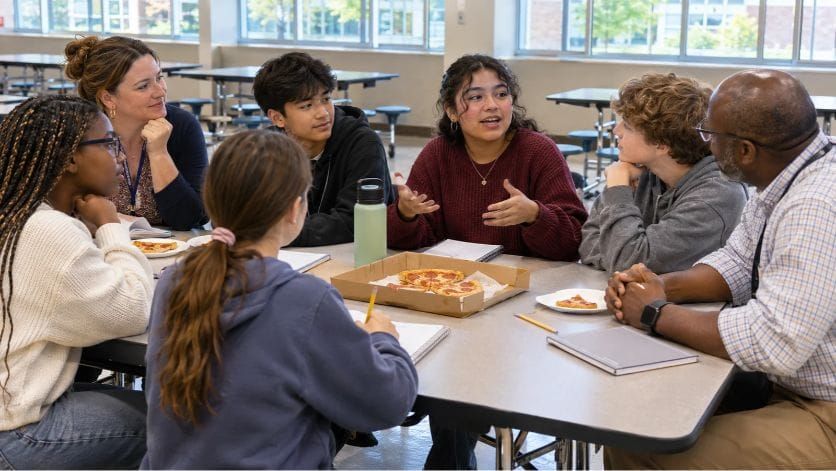
At a recent National Council of School Safety Directors (NCSSD) roundtable, members shared how they involve students in school safety, from recognizing everyday safety habits in elementary school to giving older students a role in leading safety initiatives.
Students can help adults understand how safety practices work in their day-to-day lives. They can tell staff what makes them hesitate to report a concern and help develop materials that make sense to their peers. Members shared how they make room for that input and give students opportunities to act on it.
Give Students a Regular Place to Raise Concerns
One former principal held a monthly, half-hour pizza lunch with a student advisory committee. Two students served as chairs, and other participants rotated. Safety was one of several topics. Adults brought questions to students, and students could raise concerns of their own. The former principal found this kind of discussion easier to organize at the middle and high school levels.
“It helped build trust, transparency, and understanding and gave us a better sense of what was happening in the building,” the former principal said.
After a widely reported school shooting, one scheduled half-hour meeting lasted two hours. Students had questions and concerns they wanted to work through, and the principal let the conversation continue.
Another district established student safety councils at its junior high, high school, and alternative school. At the alternative school, the first questions were about belonging. Did students feel connected to the school? What made them feel that way? What would help if they felt disconnected? The safety leader told students that if they shared ideas, adults had a responsibility to try to act on what they heard.
The district worked with student council members at the junior high and sought a broader group at the high school, where it wanted to hear from students across a multilingual school community. Another member encouraged safety leaders to look beyond student government and invite students their classmates already turn to or listen to. Some may hesitate to join a committee, but inviting them directly can help staff build relationships with students across different peer groups and learn how those students experience safety at school.
In one district, students on safety committees for grades five through eight suggested putting QR codes on school buses so their peers could easily find the district’s tip line. A second district adopted the idea as well.
Recognize Everyday Safety Habits
One K–8 district introduced a student safety spotlight program that paired age-appropriate lessons with awards. At the elementary level, students learned to notice and address everyday concerns, such as a spill or a door that hadn’t closed. At the intermediate and junior high levels, the district discussed more complicated decisions, including when to tell an adult they’re worried about a friend.
One monthly elementary prize was a ride to school in a police car. The member said students and families responded positively and that students began recognizing the safety director and asking when the next award would be.
The district’s safety director also created three-minute homeroom videos on topics suggested by staff and gave teachers follow-up questions to discuss with students. Older students began emailing the director directly with ideas, questions, and suggestions about school safety.
Ask Students Why They Hesitate to Report
One member reviewed records and witness statements from several elementary school incidents involving imitation guns. In some cases, students told an adult they’d seen a classmate with an imitation gun only when they were about to get in trouble themselves.
The member described a different pattern at the middle school level. Students seemed more willing to speak up when they thought an item posed a serious danger. A pocketknife might draw little concern, while a larger knife might prompt a report. Some students believed a gun was real only after seeing ammunition or handling it. At the high school level, the member recalled students referring to past tragedies when explaining how they understood a concern.
The member wondered whether familiarity with toy blasters, pellet and BB guns, and portrayals of firearms in video games and movies made some students quicker to assume a gun was fake.
A group-chat incident gave another member a chance to ask students directly. An online threat that turned out to be false had prompted the district to move classes online for a day. When students learned they would return to school, a fifth grader posted a comment wishing harm on a teacher and shared images of a firearm. Of roughly 30 students in the chat, two told their parents. Those parents contacted the district, which addressed the concern before school resumed.
The next day, the safety director met with as many of the students as possible and asked why more of them hadn’t spoken up. Some said they assumed the threat wasn’t real. The director used the conversation to clarify what the district expected: students should tell a trusted adult what they saw or heard, even when they’re unsure how serious it is. Adults can assess the concern from there.
The safety director said the district received more tips after those conversations, including some about minor concerns. For the director, accountability meant returning to the expectations students and adults had already discussed, asking students what still made reporting difficult, and recognizing those who spoke up. The director also wanted that follow-up to reach students in other buildings. Families could reinforce the message at home, and teachers, administrators, and social workers could keep the conversation going at school.
Build Reporting Lessons Into What Schools Already Teach
One district began teaching a middle school reporting lesson after recovering several firearms over two school years. In one case, a gun discharged in an elementary classroom. The member said it had been in the classroom for days and several children had been shown it. Teachers had assumed students already knew to tell an adult. The member began encouraging elementary teachers to revisit what to do if students see a firearm, a knife, a vape, or another prohibited item.
The member also urged schools to consider what students may have encountered outside the classroom. The district had recovered firearms in separate incidents involving students who were making and selling them outside school. Those cases underscored for the member how wide the range of students’ experiences can be and how easily adults can misjudge what students already know.
Before developing the middle school lesson, the district reviewed its K–12 health curriculum and what local law enforcement was already teaching. Staff looked at when students encountered topics such as drugs and weapons and where instruction could build on earlier lessons. The aim was to give students age-appropriate guidance across grade levels, with a clearer idea of who was teaching what.
The district offers the lesson each quarter in seventh-grade health classes. District safety staff teach alongside a school counselor and an administrator, and students work through three reporting scenarios. Families receive a letter about a week before the lesson and can opt their children out. The member said few families had done so.
Part of the lesson uses examples of real firearms that students might mistake for toys. The point is that students can’t reliably tell whether a gun is real by looking at it. The safety director leads that portion because teachers have been uncomfortable presenting it. The member understood their hesitation and questioned how much of this instruction schools should take on. The district’s approach grew out of the incidents it had experienced locally.
The district surveys students before and after the lesson and asks them to answer a few questions at the end of class. The member said students showed better understanding immediately after instruction. How much they remember later and whether it changes what they do when they have a concern remain open questions.
Give Students Work They Can Help Lead
Members shared ways to involve students beyond answering survey questions or attending advisory meetings. One described students helping produce and narrate training videos. The same member had seen older students and art clubs create illustrated stories to help younger children understand what to expect in unfamiliar situations. Another district had a student group focused on making it easier for peers to talk about mental health.
One member said the work was more likely to continue when it was built into the curriculum or organized as a club. The member pointed to peer mediation taught as a class, with a teacher responsible for it and time set aside in the schedule.
The member also cited Make Our Schools Safe (MOSS) Clubs and SAVE Promise Clubs as options, especially at the high school level and in some middle schools. A district could give an adult sponsor a small stipend, as it might for another club. The sponsor can keep meetings and activities on track while students help decide what to work on and lead the activities. Both programs offer resources and activity frameworks, giving the adults and students something to build on.
In a ZeroNow webinar panel, MOSS founder Lori Alhadeff and two MOSS Club co-presidents from Marjory Stoneman Douglas High School shared how students can use clubs to raise safety concerns and bring their ideas to school leaders.
The NCSSD member who cited MOSS and SAVE clubs said occasional surveys and small-group meetings can lose momentum when nobody is responsible for following up. A class, club, or standing council gives students and staff a regular place to return to the work and see what came of their ideas.
“People develop ownership when they have input into the process and a stake in it,” another member said.
ZeroNow’s paper draws on the NCSSD roundtable and a panel with Make Our Schools Safe founder Lori Alhadeff and two student club leaders. It offers practical ways to help students speak up about safety concerns and lead initiatives of their own.