SROs vs. SSOs: How Do Their Roles, Responsibilities, and Training Differ?
School resource officers (SROs) and school security officers (SSOs) share a common goal, but their roles, authority, and training can differ.

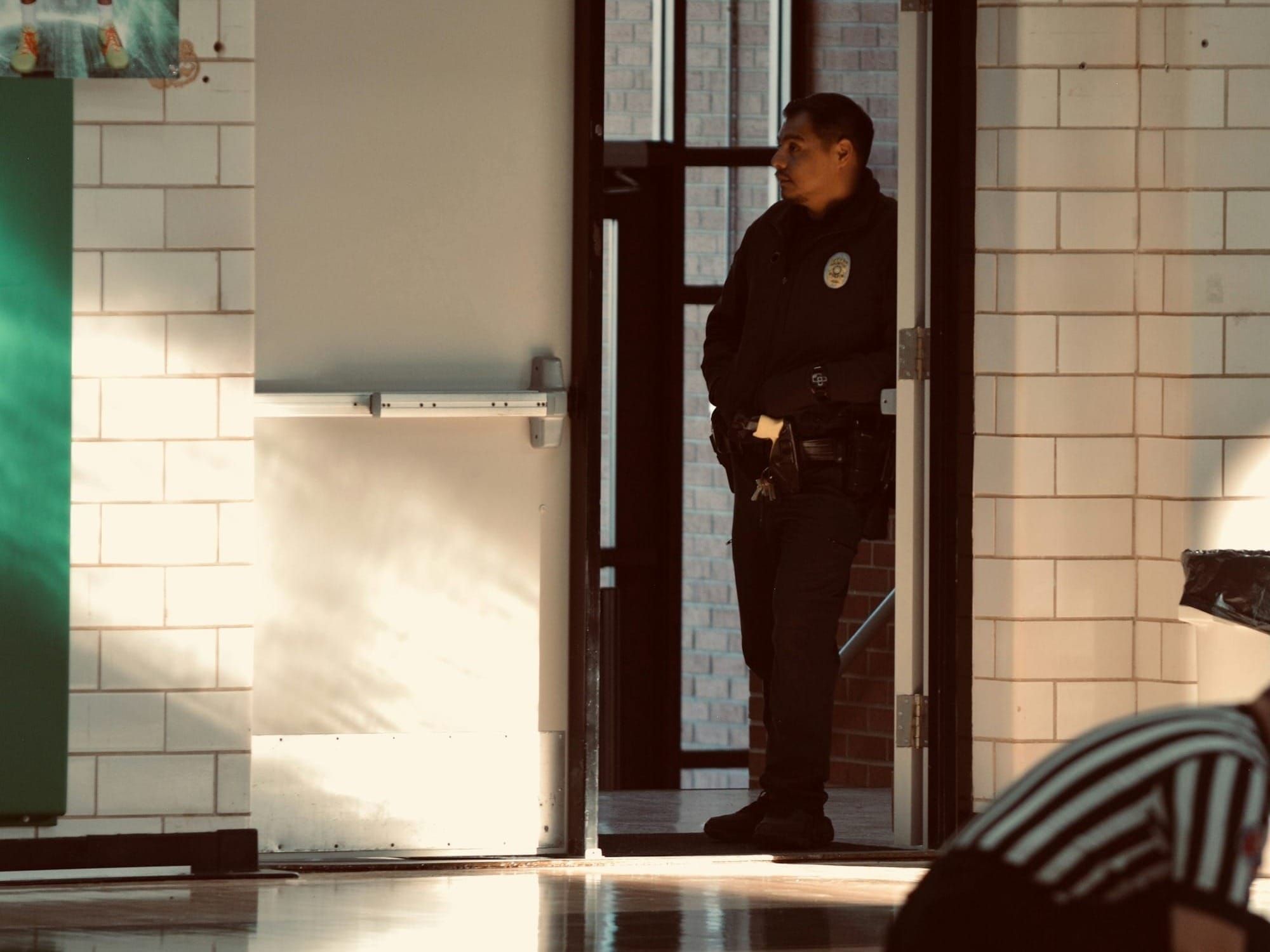
School districts take different approaches to staffing their safety and security teams. Some rely on school resource officers (SROs), others employ school security officers (SSOs), and many use a combination of the two.
A recent discussion among National Council of School Safety Directors (NCSSD) members highlighted just how much those models can vary. Members described districts using SROs and SSOs together, assigning the positions to different types of schools, and, in one case, using consistent off-duty law enforcement officers to help fill the SRO role because of staffing limitations at local law enforcement agencies.
The discussion also turned to training, with members sharing positive experiences with courses designed specifically for SROs, SSOs, and those responsible for supervising school-based law enforcement programs.
Despite the different approaches, SROs and SSOs may be part of the same school safety team, but they don't necessarily have the same responsibilities, authority, or training.
Understanding those differences can help districts determine how each position fits into their safety strategy, what training personnel need, and how they can work effectively with students, staff, and administrators.
What's the Difference Between an SRO and SSO?
Generally, an SRO is a sworn law enforcement officer assigned to a school, while an SSO is a school safety or security professional whose responsibilities and authority can vary depending on state law, district policy, and the position itself.
In Washington, for example, the Office of Superintendent of Public Instruction defines SROs as commissioned law enforcement officers with arrest authority who are employed by a police department or sheriff's office. SSOs and campus security officers, by comparison, are district employees who are not commissioned law enforcement officers and cannot make arrests.
Those distinctions aren't universal, however. State laws and local staffing models can define school security positions differently, making it important for districts to clearly establish what each person is responsible for and where their authority begins and ends.
The difference isn't simply who can make an arrest. It can shape how SROs and SSOs interact with students, respond to emergencies, handle potential criminal activity, and work alongside administrators. It also affects the training they need.
SRO vs. SSO: What's the Difference?
| School Resource Officer (SRO) | School Security Officer (SSO) | |
|---|---|---|
| Typical employment | Law enforcement agency | School district or security provider |
| Law enforcement status | Sworn or commissioned law enforcement officer | Typically non-sworn |
| Arrest authority | Yes | Typically no |
| Primary focus | Law enforcement, emergency response, prevention, and relationship-building | Campus safety, security, prevention and support |
| Training | Law enforcement training plus school-specific training | Requirements vary; school security-specific training may be provided |
| Works with | Students, staff, administrators, first responders, and law enforcement | Students, staff, administrators, SROs, and other safety personnel |
Note: SSO titles, responsibilities, authority and training requirements vary by state and district. Schools should consult applicable state law and local policies when defining the position.
Different Roles Require Different Training
Just as SRO and SSO responsibilities can vary, so can the training districts provide beyond state and local requirements.
NCSSD members described using a mix of national programs, state and local training, conferences, and training developed within their own school systems. Training from the National Association of School Resource Officers (NASRO) came up frequently, with several members saying they have participated in its courses or brought them to their districts.
One member said their school recently had NASRO facilitate its 24-hour SSO course, describing it as "wonderful training for our staff." Another said all new SSOs in their district complete the NASRO SSO course and are encouraged to continue their education through additional NASRO training.
NASRO offers separate training programs for SROs and non-sworn school security personnel. Its 40-hour Basic SRO Course covers the responsibilities of SROs through NASRO's Triad Model of school-based policing. In addition to emergency operations planning and armed assailant response, the training addresses de-escalation, behavioral threat assessment, digital safety, mental health, students with disabilities, and developing relationships with students.
NASRO's 24-hour School Security Officer Course is designed specifically for non-sworn safety and security officers, whether they work alongside an SRO or independently. Training focuses on functioning as a security officer in a school environment, working effectively with students, and school safety and emergency planning.
Members also described training that goes beyond courses specifically designed for SROs and SSOs. Depending on their roles and local needs, members said safety personnel receive training in areas including active shooter response, Incident Command System (ICS), CPR and first aid, Stop the Bleed, mandatory reporting, mental health, substance use, and large-event security.
One member described a district that draws on both outside programs and in-house expertise to train its safety personnel. SSOs have received EBRS (Escape, Barricade, Resist and Survive) and Crisis Prevention Institute (CPI) training, while camera room personnel receive operator training on the district's video management system. The district also reviews the I Love U Guys Foundation's Standard Response Protocol (SRP) and practices reunification with administrators and feeder schools.
The district also uses its own personnel to provide training. Nurses cover first aid, CPR, Narcan, and EpiPen, while SROs provide Stop the Bleed and de-escalation training. Deans, counselors, and other staff address mental health concerns, signs of suicide, vaping, drugs, and substance use resources available to students.
Some districts also bring their SROs and SSOs together for training. One member said their SROs participate in a weeklong summer training and invited SSO staff to attend this year. The district has also developed internal training specifically for its SSOs based on their responsibilities and the needs of the school system.
State requirements can also shape training. One member who helped develop Washington's mandatory school safety and security staff training said the program includes 13 subject areas, with an emphasis on topics such as adverse childhood experiences (ACEs), adolescent brain development, social-emotional learning, de-escalation, and FERPA. The member said the training has had a positive influence on building the right climate in schools.
Another member said their district's contracts with local municipalities for 15 SROs include a series of trainings in addition to those required by the Illinois Law Enforcement Training and Standards Board. The district provides Crisis Prevention Institute (CPI) training to help SROs respond to students in crisis, while its Specialized Student Services staff provide training on working with students with special needs and autism awareness. SROs also attend the Illinois School Resource Officers Association's annual conference, where they can earn training credits toward maintaining their state certification.
These examples show that training doesn't necessarily end once someone meets the requirements for the position. The environment SROs and SSOs work in, the students they interact with, and the situations they're expected to handle can all help determine what additional training is valuable. As one member explained, their district changes some of its training each year based on what personnel want or need to learn more about.
School Safety Is Also About Relationships and Culture
SROs and SSOs spend their days in an educational environment, often interacting with the same students and staff repeatedly. Their day-to-day responsibilities can also involve building relationships with students and becoming part of the school community.
Mississippi Department of Education guidance, for example, describes SROs as law enforcement officers who may also serve as educators, informal counselors, and emergency managers. The guidance says SROs can build relationships, serve as an additional listening resource, reinforce positive behavior, and connect students with needed services.
It also draws boundaries around the role. SROs should partner with administrators to maintain a safe school environment, but should not be responsible for administering school discipline, monitoring classes, or handling classroom management.
Research underscores why those distinctions can matter. A national study examining the effects of SRO placement found that SROs reduced some forms of school violence, including physical attacks without a weapon, but did not reduce gun-related incidents. At the same time, SRO presence increased out-of-school suspensions, expulsions, police referrals and arrests. Some of those increases were greatest among Black students, male students, and students with disabilities.
The findings don't necessarily answer whether a district should or shouldn't have SROs. Instead, they reinforce the importance of clearly defining the role officers play once they enter a school and providing training specific to working with students.
Whether a district relies on SROs, SSOs, or a combination of the two, those professionals are ultimately working within a larger school safety system. Knowing their responsibilities, understanding their boundaries, and building relationships with the people they are there to protect can help each member of that team contribute effectively.