
School Visitor ID and Student Pickup Policies: When Exceptions Arise
NCSSD members discuss visitor identification, student pickup procedures, digital IDs, and how schools can prepare front office staff to handle exceptions.

Editor's Note: Participants are not identified by name or school district. The examples describe practices and experiences shared during the discussion, rather than verification methods or release procedures endorsed by NCSSD.
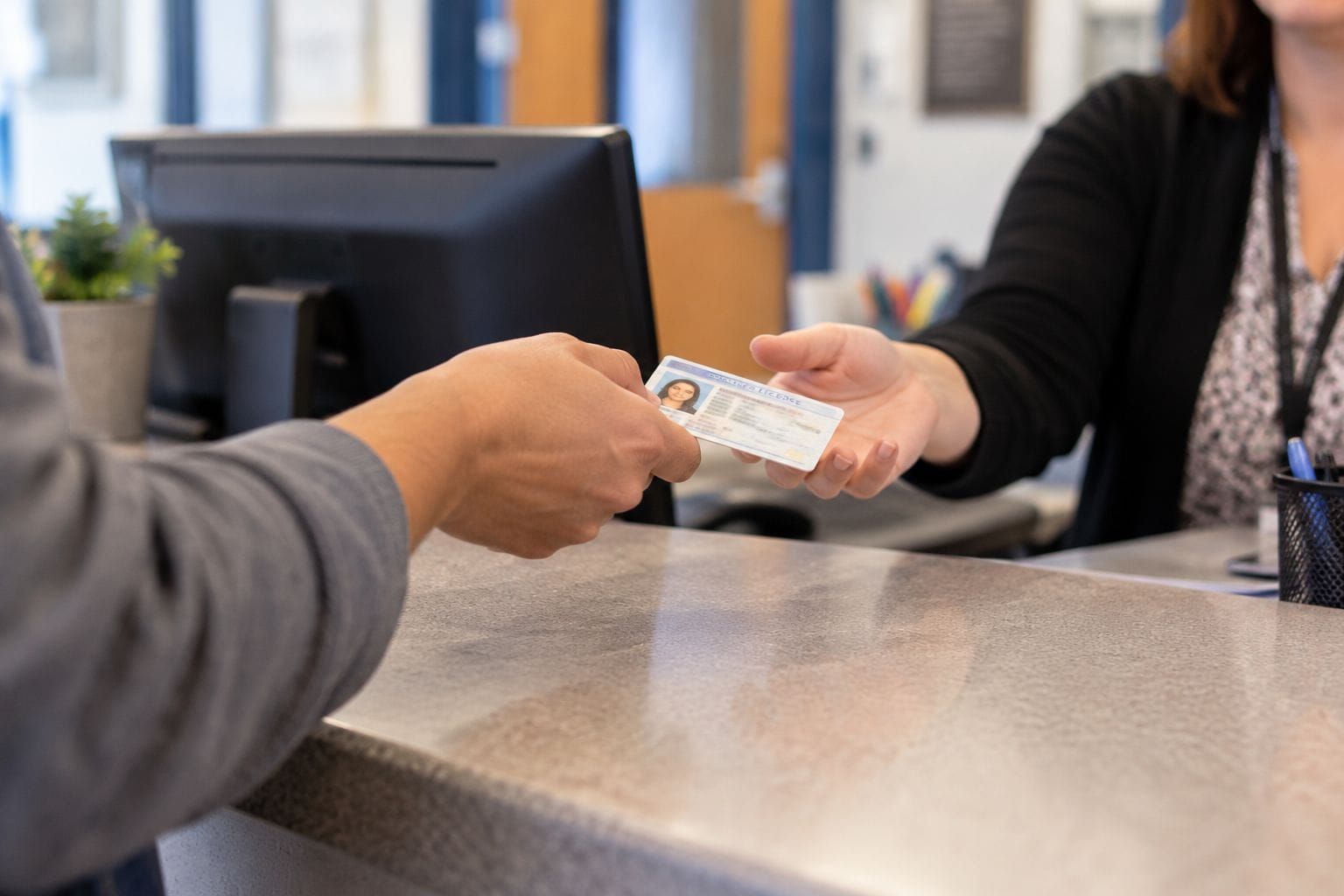
A parent arrives to pick up a child but has lost their identification. Another presents a digital ID on a phone. An administrator recognizes a visitor and brings them inside without completing the required check-in process.
During a National Council of School Safety Directors (NCSSD) roundtable on front office safety, members discussed situations like these and the decisions they leave to employees at the front desk.
Participants described differences between buildings, gaps in written guidance, and disagreements about how much flexibility schools should allow. Throughout the discussion, members emphasized the importance of consistent expectations and clear direction for front office employees when families cannot meet a requirement.
Applying the Same Procedures Across Schools
ID and pickup requirements generated discussion about consistency across buildings. One member described a parent with children in an elementary, middle, and high school encountering a different process at each location.
Another participant said inconsistencies often come to light through school visits, conversations with staff, or questions from parents who want to know whether a particular requirement is actually district policy.
The member described administrators bringing parents inside without an ID because they knew them and the visit was only for a short meeting. After encountering that practice, the participant sent a reminder that familiarity did not replace the district's required process. Support from the superintendent and other leaders helped reinforce those expectations with principals and front office staff.
Members also discussed how exceptions for familiar visitors affect the next person arriving at the door. A parent asked to show an ID may have just watched someone else enter without being asked. One participant said complaints about that difference can include concerns that the parent was singled out or treated like a criminal. The member emphasized discussing those scenarios with front office employees and explaining the reasons behind the requirements.
The wording of a procedure can create a different problem. One member described a manual that listed a state ID or driver’s license. Staff rejected other forms of government-issued identification because they were not among the listed options.
The district revised the manual to address that issue. The participant presented it as an example of employees following written guidance closely, even when the language had not accounted for the types of identification a family might bring.
When a Parent Does Not Have the Required ID
Members expressed different views about what should happen when a parent cannot present the required identification.
One participant who works with multiple districts questioned whether schools always give administrators enough flexibility to address individual circumstances. The member offered the example of a parent who has lost an ID, will not be paid for another two weeks, and cannot immediately afford a replacement.
The participant distinguished that situation from someone repeatedly refusing to follow the procedure and urged schools to consider the consequences of their response for both parent and child.
Another member emphasized that a parent's behavior during an interaction also matters. The participant described an incident in which a parent blocked school buses for more than an hour while refusing to obtain an ID.
The exchange illustrated the tension between enforcing identification requirements consistently and allowing flexibility when a parent genuinely cannot meet them.
A third member described how staff handled one missing-ID situation. They called the number listed for the parent in the student information system, and the phone in the parent's hand rang.
“We were trying to be flexible in that moment,” the member said.
The participant acknowledged uncertainty about whether that approach was legally acceptable or appropriate as a standard verification procedure, describing it as a response to that particular situation rather than a recommended practice.
Access to Language Assistance
Members also discussed situations in which a family may have difficulty understanding or meeting a requirement. One participant raised the example of a parent without standard identification who also faces a language barrier.
The member asked what translation services are available to front office employees. Although language assistance may fall outside a safety director's direct responsibilities, access to those services can help staff understand a family's circumstances, explain school expectations, and prevent misunderstandings from escalating.
The participant distinguished between people who refuse to cooperate and people who have no ability to meet the requirement as presented. They urged safety leaders to consider the range of circumstances front office staff may encounter.
Responding to Digital Identification
Digital identification presented another challenge for front office employees, particularly when schools have not clearly communicated whether digital credentials are acceptable.
Two members said their districts require physical identification. One explained that their schools lack a way to authenticate digital credentials, making it difficult for staff to distinguish a valid ID from an image or screenshot.
Parents sometimes question why schools won't accept digital IDs that are accepted elsewhere, the member said. Without clear guidance, front office employees may feel pressure to accept them simply to avoid a confrontation.
Requests Involving Rideshare and Private Drivers
Requests involving rideshare and private transportation services presented another challenge. Members discussed situations in which a parent arranges for a driver to collect a student, including whether school procedures permit that type of release and what front office employees need to know before allowing it.
One participant noted that state law may also affect how schools handle these requests. The member described restrictions in their state that prevent school employees from placing students in taxis or rideshare vehicles, even though families may independently arrange that transportation.
One member said they had not encountered a rideshare driver arriving alone to collect a student and had not previously considered the situation. The closest example involved a family member who arrived without an ID while their rideshare driver waited outside and was unwilling to wait.
Another participant described parent-arranged private car services that regularly transport students. For those services, the participant said their district requires the driver to be listed on the student’s emergency card, requires the same driver for the arrangement, and requires a note specifying the pickup. The member described adapting existing authorization procedures to address those arrangements.
The discussion highlighted the importance of anticipating situations that may not fit neatly into existing procedures. Front office employees need clear guidance on how to respond, when to involve an administrator, and what flexibility, if any, they have when handling visitor access and student release requests.
Additional Front Office Safety Resources
For additional guidance on strengthening front office safety, explore these resources.
- School Front Office Safety: Are Staff Getting the Training They Need? – NCSSD members discuss approaches to training front office employees, preparing them for difficult interactions, and ensuring administrative support.
- The First Line of Defense: 3 Layers of School Front Office Security – Examines three layers of front office security and considerations for strengthening visitor management and access control.
- The Front Office: Frontlines of School Security – A free white paper from ZeroNow, developed with contributions from NCSSD members, examining the policies, training, and organizational support needed to better prepare front office employees.