
School Front Office Safety: Are Staff Getting the Training They Need?
NCSSD members discuss how schools can make time for front office safety training, prepare employees for difficult situations, and ensure they have administrative support.

Editor's Note: Participants are not identified by name or school district. The examples describe members' experiences and practices in their own schools.
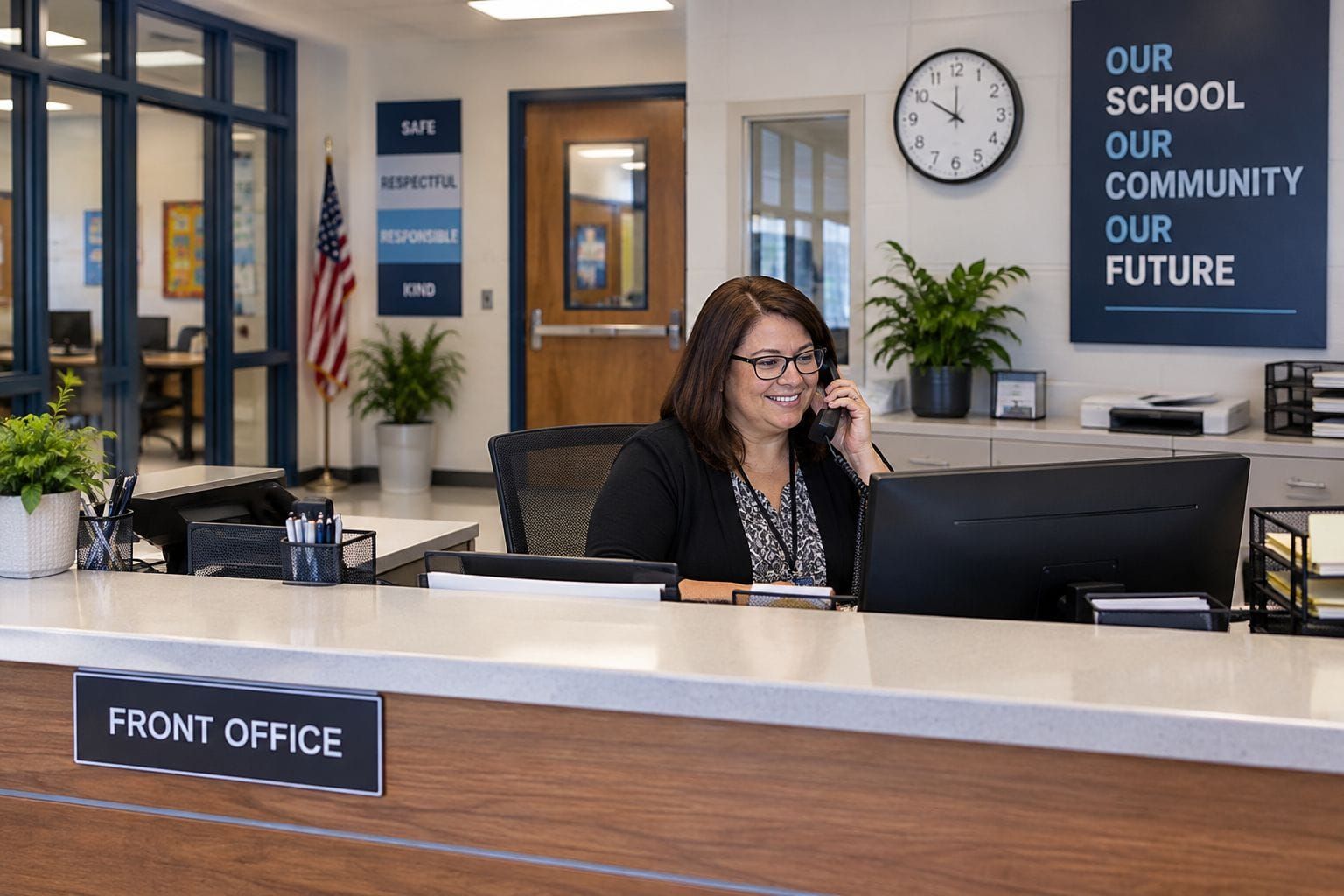
School secretaries and other front office employees are often the first people to encounter an angry parent or someone seeking access to a school building. At the same time, they may be answering phones, coordinating with administrators, assisting students, and managing the daily flow of visitors.
During a National Council of School Safety Directors (NCSSD) roundtable on the front office as a security control point, members discussed how those responsibilities are reflected in training, emergency planning, and support from administrators.
“They are amazingly valuable and utterly exposed,” one participant said, describing front office employees as the face of the school and its first point of contact.
Another member said that, outside the safety team itself, frontline employees were the next priority for safety training. The challenge was finding ways to reach them without disrupting daily school operations.
Members shared ways to arrange coverage and make training available during the workday. They also discussed what that training should include, whether staff have permission to end abusive interactions, and how leaders respond when employees enforce safety procedures.
Finding Time for Front Office Safety Training
Front office employees play an important role in a school's layered safety approach, but their daily responsibilities can make it difficult to participate in training.
One participant described using professional development time and virtual training to reach frontline employees. The member emphasized keeping sessions short, focused, and accessible while reinforcing the employees' role as the school's first line of defense.
Another member described the scheduling challenges associated with hourly employees. Staff wanted the training, but they did not have planning periods. Before- or after-school sessions required additional paid time, and requests for overtime funding were almost always denied.
For that member, arranging coverage during the workday offered a way to reach employees who otherwise had little opportunity to participate.
Members described several approaches to keeping an office functioning while employees attend training. A participant who trains employees across several districts uses late starts and early releases where available. The member also coordinates with department heads who can cover the front office for a defined period. For example, a department head might take over reception duties for an hour while office staff complete training.
The participant has also asked district safety directors to help arrange coverage while training is delivered.
The same member described arrangements between nearby schools for maintenance staff training. Employees from one campus can provide temporary support at another while its staff participate.
Members also discussed using professional development days and virtual sessions to accommodate safety training. One participant described holding a large virtual safety briefing during a professional development day to reach more staff.
That member encouraged safety leaders to examine the school calendar for opportunities already built into the schedule and coordinate with the people who oversee front office employees. Principals may supervise them directly, while central office employees oversee other aspects of their work.
Virtual training can help deliver a consistent message, but it also requires engagement, the participant said. Staff may minimize a training window or allow a session to run without closely following it. The member cautioned that simply attending a virtual session doesn't necessarily mean employees are engaged or retaining the information.
Preparing Front Office Staff for the Work They Actually Do
A member who provides safety training described separate sessions for administrators, teachers, front office staff, and transportation employees. Each group works within the school's emergency procedures, but the training focuses on its particular responsibilities.
For front office staff, that includes coordination with administrators, emergency drills, reunification, and the information employees may need to communicate under pressure.
The participant said front office employees need to understand how their administrators work and how to coordinate with them when multiple demands arise. General schoolwide training, which may focus heavily on teachers, does not necessarily address those needs.
Emergency announcements were one example. The member described adapting existing response materials to explain what an announcement should sound like, which information should be included, and why staff should avoid lengthy explanations during an emergency.
Members identified other areas for front office preparation:
- Screening visitors and operating entry and visitor management systems
- Responding to difficult interactions in person and by phone
- Receiving a bomb threat and following the school’s response procedures
- Managing late arrivals, drop-offs, and early dismissals
- Understanding who is authorized to pick up a student
- Knowing when to contact an administrator or initiate an emergency response
The conversation also extended to other employees who may miss routine safety training, including temporary instructional assistants, paraprofessionals, custodians, and cafeteria staff.
One participant added coaches who work with schools but are not otherwise on staff. A coach may face a confrontational parent without having received the same preparation as school employees. The member emphasized that those coaches also represent the school and need customer service and de-escalation skills.
What to Do When De-escalation Does Not Work
One participant questioned whether schools explain the limits of what they expect front office employees to handle. Schools frequently discuss teaching de-escalation, the member said, but may not tell staff when an interaction has become too abusive or unsafe to continue.
“What have you told your staff about when enough is enough?” the participant asked.
The member also asked whether employees have written permission to end an interaction rather than continue accepting abuse, and how that message is reinforced with principals.
The participant described procedures in their district that direct front office personnel to attempt de-escalation and call an administrator to assist if it does not work. The procedures also address activating emergency responses when there is imminent danger.
Another provision explains that front office employees are not expected to resolve every issue they receive and should avoid unprofessional verbal or physical confrontations. The member said staff should understand when they can walk away, what assistance is available, and which actions they are authorized to take to protect themselves and others.
Employees may be new to education or arriving from a school with different procedures, the participant noted. Their familiarity with the school's expectations cannot be assumed.
The member described the question they do not want employees asking in the middle of a crisis: “Can I really do this?”
Leadership Support for Front Office Safety Decisions
The same participant linked staff confidence to how administrators respond when an employee enforces a safety requirement.
If staff decide not to admit a confrontational visitor, do they know leadership will support a decision made within school procedures? Or have they previously been criticized or disciplined for making that decision?
The member expressed concern that reprimanding an employee can be easier than addressing the conduct of an adult visitor. They also questioned whether a lack of support contributes to turnover, while acknowledging they did not have data to establish that connection.
The discussion emphasized that training employees on procedures is only part of preparing them to make decisions at the front desk. Staff also need to understand what authority they have and whether administrators will support them when they act within those expectations.
Including Front Office Staff in Drills
Members questioned whether the responsibilities assigned to front office staff during drills match what they would be expected to do in an emergency. One participant raised the example of secretaries remaining inside during a fire drill because they were expected to answer phones.
“When the fire alarm is going off during a drill and they don't leave, what are we teaching them?” the participant asked.
The member urged schools to practice responses that reflect an actual emergency and include front office staff in that preparation.
The example also raised questions about whether schools have adequately considered front office responsibilities when developing emergency procedures. Employees who are expected to support communications and daily operations still need to understand their own responsibilities during an evacuation or other emergency.
Making Safety Procedures Accessible and Practical
The discussion included questions about whether schools provide front office employees with written direction on visitor management, confrontational interactions, bomb threats, and other responsibilities.
One member described providing a one-page guide alongside training, organizing information so staff can quickly locate instructions. The guide can also be taken along if employees need to leave their workstations.
Another participant noted that training materials and compliance documents are not always user-friendly. The member emphasized the value of creating materials that employees can realistically use rather than documents that simply satisfy a requirement.
Members also distinguished between communicating a policy to families and ensuring staff understand how to carry it out.
One participant suggested having staff read and acknowledge procedures as a way to reinforce expectations, particularly when schools have multiple buildings and need consistent practices for visitor access, student arrivals, and dismissals.
Coordinating Training and Communication Across Departments
School safety directors also need to coordinate with the administrators and departments responsible for supervising front office employees.
One participant emphasized the importance of understanding who oversees school secretaries and other front office staff, noting that responsibilities may extend beyond building principals to central office departments.
The member described using recurring virtual meetings to maintain communication with school administrators throughout the year. What began as weekly safety and security briefings eventually became larger operations meetings involving human resources, finance, and other departments.
The approach allowed the district to share safety updates with administrators from multiple schools throughout the year, rather than relying solely on a beginning-of-year briefing.
That coordination is particularly important when it comes to preparing front office employees. As the discussion highlighted, schools need to do more than provide a training session or written procedure. They also need to make time for staff to participate, tailor instruction to their responsibilities, and ensure employees know they have administrative support when difficult situations arise.
Additional Resource on Front Office Safety
For additional guidance, explore these resources on strengthening front office security.
- The Front Office: Frontlines of School Security – A free white paper from ZeroNow, developed with contributions from NCSSD members, examining the policies, training, and organizational support needed to better prepare front office employees.
- The First Line of Defense: 3 Layers of School Front Office Security – An article based on a resource shared by an NCSSD member, outlining three layers of security schools can consider when evaluating their front office operations.