How Edgewood High School Integrated Wearable Alert Badges Into Its Emergency Response Plan
As Alyssa’s Law requirements gain momentum, the Wisconsin school shares its approach to introducing new safety technology, training staff, and building confidence.

As more states adopt Alyssa’s Law requirements for school panic alert systems, some schools are moving ahead with the technology even without a state mandate.
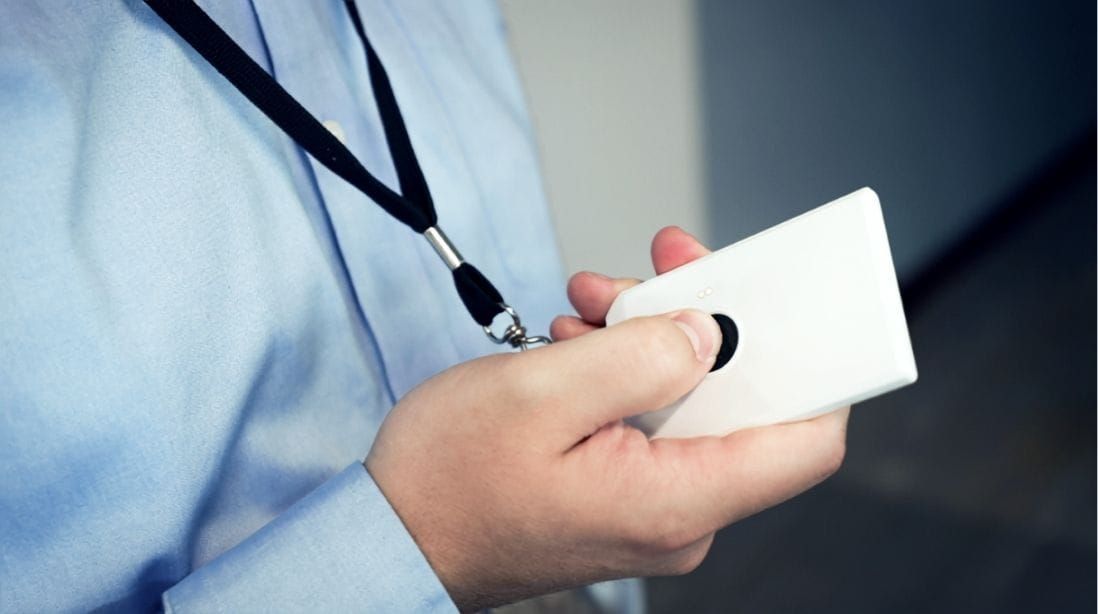
Edgewood High School of the Sacred Heart in Madison, Wis., is among them. The school recently equipped faculty and staff with InformaCast Wearable Alert Badges from Singlewire Software as part of a broader effort to strengthen its emergency response capabilities.
Wisconsin has not enacted Alyssa’s Law, but similar legislation has gained momentum across the country. View our state tracker here.
For Edgewood, a key consideration was how the wearable alerts would fit into what the school already had in place.
“Most importantly, the system needed to seamlessly align with our existing technology, notification infrastructure, and crisis response model,” Tim Patton, Edgewood's director of facilities and safety, told School Security Leadership.
Patton said each additional system can introduce new layers of information, terminology, and functionality, potentially making it more difficult for staff to use and reducing their confidence in the technology.
Rather than operate as a separate safety system, Edgewood's wearable badges work alongside the school's existing use of the I Love U Guys' Standard Response Protocol (SRP) and InformaCast.
The badges provide another way for staff to activate the school’s crisis response procedures, with the added benefits of speed, ease of use, and the ability to discreetly initiate an alert. Location-tracking capabilities can also help identify where assistance is needed, including during an emergency that may be moving.
Phasing in New School Safety Technology
Patton said the order in which schools introduce emergency response systems and technology is important.
Edgewood already had notification infrastructure in place, including its PA system and notifications displayed on screens. The school first focused on staff understanding of SRP before introducing additional ways to initiate those responses.
InformaCast was added next, giving staff the ability to change the status of the building for responses ranging from a Hold to a Lockdown. Wearable badges followed.
“We can improve on our roll out but a technology first approach without internalization, understanding and practice in the SRP first, is unlikely to result in the individual user confidence necessary to incorporate the technology effectively into the overall plan,” Patton said.
The phased implementation was partly the result of practical constraints, including the timing of equipment and technology and the availability of staff training time.
InformaCast was introduced during the semester, followed later by the wearable badges. Staff received training at different points throughout the rollout, and Edgewood ultimately dedicated a full eight-hour day to SRP training for faculty and staff.
Patton said helping employees understand the relationship between the different components was important. Instead of viewing each piece of technology as another standalone system they needed to learn, staff could see them as additions to the emergency response structure already in place.
Early Benefits of Edgewood's Wearable Alert Implementation
The wearable badges can be configured to allow staff to initiate different types of responses depending on the situation, including requests for assistance that do not require a school-wide emergency response.
Edgewood is still early in its implementation, and Patton said it is too soon to determine how the technology will ultimately affect day-to-day operations and emergency response.
However, he said the rollout of Singlewire's software, coupled with the administration's decision to dedicate eight hours to staff safety training, has helped build confidence among staff that the school has a plan, employees understand their individual roles, and they are prepared to respond.
School Safety Technology Should Complement the Emergency Plan
Looking back at the implementation process, Patton said having a safety team and sufficient time to develop a multi-year vision for a complete emergency operations and safety plan would make implementing new systems easier.
“Technology and software solutions have to complement a solid plan or we run the risk of spending our valuable limited time reacting to new stand-alone tools instead of understanding how they fit into our overall plan,” he said.
Patton said technology can also reinforce the idea that school safety is a collective responsibility. At Edgewood, the system expands the ability to initiate a response beyond the administrative office. Patton said the technology is intended to improve the speed, quality, and actionability of communication while sharing control that has traditionally been concentrated among administrators.
“The system complements our plan and preparation by being aligned with the plan and not a new standalone tool or plan that has to be learned independent of the plan."
What Schools Should Ask Before Adding Wearable Alerts
For schools considering wearable alert systems or other safety technologies, Patton recommended evaluating the technology in the context of the school's existing plans and the employees who will ultimately be expected to use it.
“Does it complement the plan? Will it increase end user confidence? Will it be used? How likely is it to be on the shelf within two years?” he said.
At Edgewood, the implementation is continuing. Patton said future improvements may include extending capabilities beyond the physical school building to other areas of the campus.