How Limestone Community High School Implemented Wearable Panic Buttons
Limestone Community High School Superintendent Keith Brown shares why the district selected CENTEGIX, how it rolled out the system, and what school leaders have learned from its use.

Editor’s Note: CENTEGIX is a supporting partner of the National Council of School Safety Directors (NCSSD). This case study was developed by School Security Leadership based on an interview with Limestone Community High School Superintendent Keith Brown.
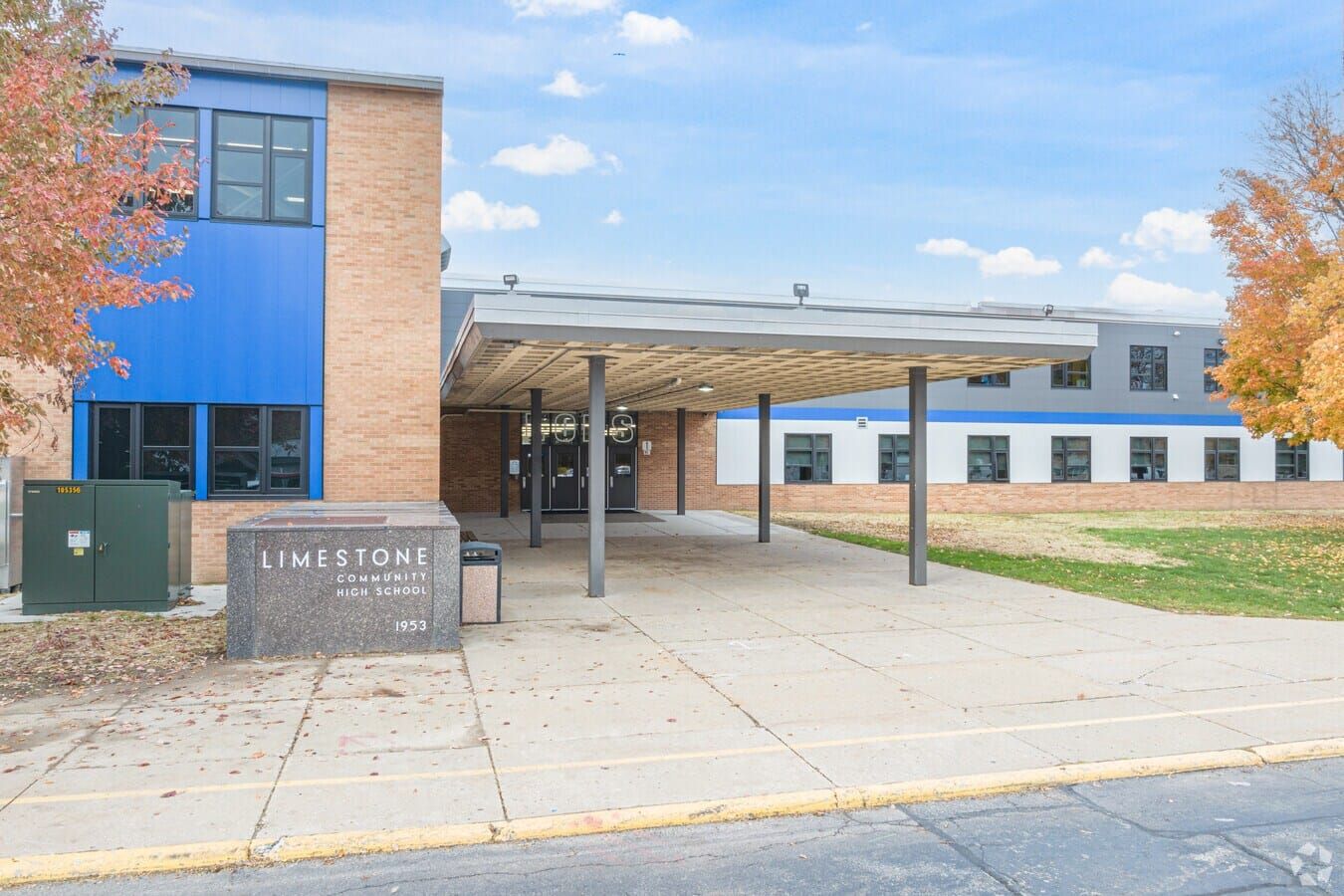
BARTONVILLE, Ill. – When Keith Brown became superintendent of Limestone Community High School in Illinois, improving school safety was one of his priorities.
The large, spread-out high school campus had been experiencing escalating student behaviors, including physical altercations and aggressive behavior. Limestone had a response team consisting of administrators, school resource officers, counselors, and nursing staff, but Brown wanted employees throughout the building to have a faster way to reach them.
“We needed a better way for employees to quickly gain assistance,” Brown told School Security Leadership. “Whether the situation involves a behavioral incident, medical emergency, parent confrontation, or another safety concern, response time and early intervention are critical to maintaining a safe and secure learning environment.”
The district ultimately selected the CENTEGIX CrisisAlert system, providing employees with wearable badges that can be used to request assistance or initiate an emergency response.
Why Limestone Selected CENTEGIX
Brown had already been researching wearable safety alert systems for several years as discussions surrounding Alyssa's Law gained momentum nationally. His interest intensified after the September 2024 shooting at Apalachee High School in Georgia, where school resource officers subsequently credited the CENTEGIX CrisisAlert system with helping provide an immediate alert and the location of the incident.
“This incident and response demonstrated how critical accurate, real-time information can be during an emergency,” Brown said. He set up a meeting with CENTEGIX within days.
Limestone was also looking beyond panic buttons as part of its long-term safety planning. The district had been exploring digital campus mapping, enhanced visitor management, and student reunification systems. Brown said administrators were particularly interested in maps that could be shared with law enforcement and first responders and identify assets such as AEDs, medical kits, the nurse's office, and fire extinguishers.
During its evaluation of CENTEGIX, the district learned those capabilities could be incorporated into the same platform alongside crisis alerts, visitor management, and reunification.
“What stood out about CENTEGIX was that it was not just a wearable panic button, it was evolving into a comprehensive school safety platform,” Brown said.
Rather than implementing several separate safety products, Brown said Limestone saw an opportunity to bring multiple functions together in one system.
Integrating Wearable Panic Buttons With Existing Emergency Procedures
Another consideration was how the system would fit with emergency procedures Limestone was already using.
The district had been working to align its procedures with the Standard Response Protocol (SRP) developed by The “I Love U Guys” Foundation. Brown said schools throughout the surrounding region have also adopted SRP, making consistency in emergency terminology particularly important.
CENTEGIX allows Limestone administrators to initiate alerts using SRP terminology. According to Brown, alert strobes display corresponding SRP colors, audible announcements provide instructions using SRP language, and messages can appear on staff computers with response directions.
“Having a system that reinforces the same terminology through visual, audible, and digital communication helps reduce confusion during a crisis and ensures that staff and students receive consistent, recognizable instructions regardless of the situation,” Brown said.
Wearable Panic Button Implementation and Staff Training
Brown describes Limestone's implementation as relatively straightforward. CENTEGIX handled most of the setup, installation, and support, and Brown said alert strobes throughout the building and campus were installed in less than a day. Because the devices operate on CENTEGIX's low-frequency network, he said Limestone did not need to hard-wire the strobes or complete infrastructure upgrades for their installation.
The district's technology director coordinated several setup tasks but was not heavily involved in the rollout. Limestone uploaded employee information, assigned individual badges to employees by scanning each device into the system, and verified that every employee had received a badge.
The leadership team also participated in training to learn the platform and determine how it would be incorporated into Limestone's existing emergency procedures.
“That allowed us to customize workflows and ensure the system complemented our existing crisis response plan,” Brown said.
Brown said training employees to operate the badges took 15 minutes or less. He spent more time explaining why Limestone was making the investment, discussing the district's approach to school safety, and demonstrating the system than explaining how to use the device.
Staff members were also able to activate their badges during training, giving them experience sending an alert while allowing administrators to verify that each device was working. Limestone later conducted demonstrations during a school improvement day and partnered with law enforcement and first responders for multiple lockdown drills using the system.
Addressing Employee Privacy Concerns
One concern did emerge that Brown said he hadn't anticipated. Some employees wondered whether the wearable devices and location capabilities meant administrators could track their movements around campus.
District leaders explained that employees are not continuously tracked through Limestone's system. Their location is identified when they intentionally activate an alert so responders can determine where assistance is needed. Brown said the concern subsided once employees understood the distinction.
Everyday Uses and Response Times
Although preparation for major emergencies helped drive Limestone's investment, Brown said the wearable badges have frequently been used for more routine incidents, including medical emergencies and behavioral situations.
Limestone's seven- to eight-member response team is typically distributed throughout the campus, meaning someone may already be close to the location of an alert.
“When an alert is activated, there is a strong likelihood that one of our responders is already nearby, allowing us to reach many incidents within 10 to 30 seconds,” Brown said.
During the first few months of the school year, employees used their badges during several medical emergencies. Brown said trained personnel were able to arrive quickly and take over, relieving staff members from having to manage an emergency while simultaneously supervising students.
The badges have also been used during behavioral incidents and other situations requiring immediate assistance. Brown believes the ability to respond earlier has helped administrators intervene in some situations before they escalate further.
Using Alert Data to Improve Operations
Limestone also reviews data from alerts to evaluate response times and identify patterns in where incidents are occurring.
One example involved a restroom that generated multiple alerts during lunch periods. After administrators recognized the pattern, the school adjusted supervision and response strategies in the area. Brown said the problem was eliminated.
“Rather than relying on anecdotal information, we now have meaningful data that helps us make informed decisions,” he said.
Staff Confidence, Morale, and Retention
Brown believes Limestone's safety efforts have also affected how employees feel about their work environment.
“When employees know that help is only a button press away, they approach challenging situations with greater confidence,” he said.
Employees have also told administrators that having a way to quickly request assistance reduces the stress of managing an incident while supervising students. Brown sees that sense of support as part of a larger consideration for recruitment and retention.
“People want to work in an environment where they feel safe, supported, and equipped with the tools they need to be successful,” he said.
School Safety and Climate Outcomes
During the first year of implementation, Limestone reported a decline in incidents of physical violence from 83 to 12, along with improvements in attendance and graduation rates and reductions in dropout rates. Brown said the extent and speed of the improvements surprised him.
The changes occurred as Limestone was implementing a strategic plan focused on safety, academics and achievement, school culture, and family and community partnerships. Brown views CENTEGIX as a component of that strategy, particularly because staff can request help sooner and administrators can intervene earlier.
“I would never suggest that CENTEGIX alone was responsible for reducing incidents of physical violence from 83 to 12 or for the improvements we saw in attendance, graduation rates, and dropout rates,” Brown said. “Those outcomes were the result of intentional leadership, dedicated staff, strong relationships, and a district-wide commitment to continuous improvement.”
Funding Wearable Panic Buttons
Limestone used school improvement grant funds to help pay for implementation. Brown said districts considering significant safety investments should explore available funding sources and work with their finance teams rather than assuming the entire expense must come from general operating funds.
In Illinois, Brown said districts may also be able to use Tort Funds for eligible expenses connected to risk management and safety planning.
“District leaders should work closely with their finance teams to identify available funding sources and determine how a safety investment aligns with their district's broader risk management goals,” he said.
It’s About the People
Asked what he would change about Limestone's implementation, Brown's answer was simple.
“The one thing I would change is that we would have implemented CENTEGIX sooner,” he said.
His larger takeaway, however, is that purchasing technology is only part of the process. Brown said implementation, training, support, and ongoing evaluation ultimately determine how effectively a system functions once it is in place.
“The investment is ultimately about people, not just a product."