
When Classroom Equipment Becomes a Safety Risk: Lessons From a Specialized Classroom
After monitors were thrown and cords were cut during behavioral incidents, one district brought safety, IT, and facilities staff together to protect classroom equipment without limiting a teacher’s ability to call for help.
School safety discussions often center on perimeter fences, vestibules, and active threat drills. What gets far less attention are the safety challenges that can emerge inside individual classrooms, where severe behavioral crises can turn everyday equipment into an immediate hazard.
As a life safety infrastructure specialist for a large school district, I see some of those challenges through the technology and systems educators rely on every day. One recently surfaced in a specialized classroom experiencing intense, daily behavioral disruptions. Heavy monitors were being thrown, and cords carrying low-voltage power and data were being yanked and cut. The issue initially came to our team as a work order to mount the teacher’s computer and phone high on a wall, out of reach.
It was an understandable response, but protecting the equipment created another safety concern: The teacher still needed immediate access to a way to call for help. Moving the phone up high on a wall might protect it, but it could also put the teacher’s lifeline out of easy reach. This is especially a concern when factoring in that what one educator can easily reach, another cannot. If an educator has to abandon de-escalation, climb onto a chair, or stretch awkwardly just to call for backup, that fix may create more danger than it solves. In a crisis, that phone isn’t office tech; it is life-safety infrastructure.
Solving the root problem meant getting the right people in the room at the same time. I walked the space with our IT site tech and our district fabrication specialist to figure out how to protect the gear without compromising response time.
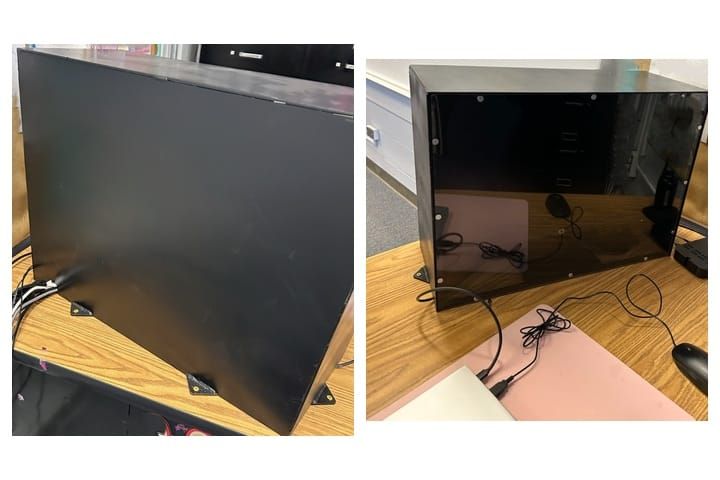
Our welder built a custom steel enclosure that bolted the monitor and docking station directly to the desk. That kept the screen right where the teacher naturally works while protecting it from blunt impacts. We core-drilled the desktop so the wires dropped straight down through the furniture, leaving no exposed slack to grab or sever. We relocated the phone to a height that remained accessible to the teacher but was harder for students to reach, with the lines protected by rigid surface conduit secured against the wall.
The impact went far beyond saving hardware. It took away the daily dread the staff felt about losing their ability to call for help. It eliminated the risk of students cutting live lines or swinging a loose monitor. On the budget side, it also ended the recurring cycle of replacing damaged equipment and filing repair tickets.
I know most districts do not have an in-house metal shop ready to build a custom enclosure, but the shop was just the tool. The actual solution came from collaboration between Safety, Maintenance, and IT. If you do not have in-house welders, that might mean partnering with your high school CTE program, working with a local machine shop, or finding heavy-duty commercial enclosures. The point is to bring the trades and technicians into the safety conversation early, rather than treating safety challenges as the responsibility of the safety team alone.
Safety Questions to Consider When Evaluating Specialized Classrooms
When evaluating classrooms where behavioral incidents may create additional safety concerns, consider the following questions:
- Can staff quickly access a phone, radio, panic button, or other means of calling for help?
- Could monitors, devices, cords, or other equipment become hazards during a behavioral crisis?
- Can equipment and wiring be secured without making it harder for staff to use?
- Have school safety, IT, facilities, and other relevant teams walked the space together?
- Are there existing district or community resources that could help develop a practical solution?
No safety team has all the answers on its own, and we shouldn't be working in isolation. That same principle extends beyond individual districts. Through the National Council of School Safety Directors (NCSSD), I've been able to exchange practical ideas with other school safety professionals facing many of the same operational challenges. Sharing what has worked, and what hasn't, can keep districts from having to solve every problem from scratch.
This article was written by NCSSD member Josh Warnke. Josh is a Life Safety Infrastructure Specialist with the Independent Boise School District in Idaho, where he helps maintain and improve critical infrastructure across 57 sites, including PA systems, VoIP, and network platforms. He has more than a decade of experience in public-sector logistics and life safety systems, with a focus on emergency-ready technology, cross-functional collaboration, and practical solutions that support student and staff safety.