
School Key Boxes: Balancing Security and Emergency Responder Access
As schools strengthen building security, ensuring law enforcement and other first responders can quickly gain access during an emergency is critical.
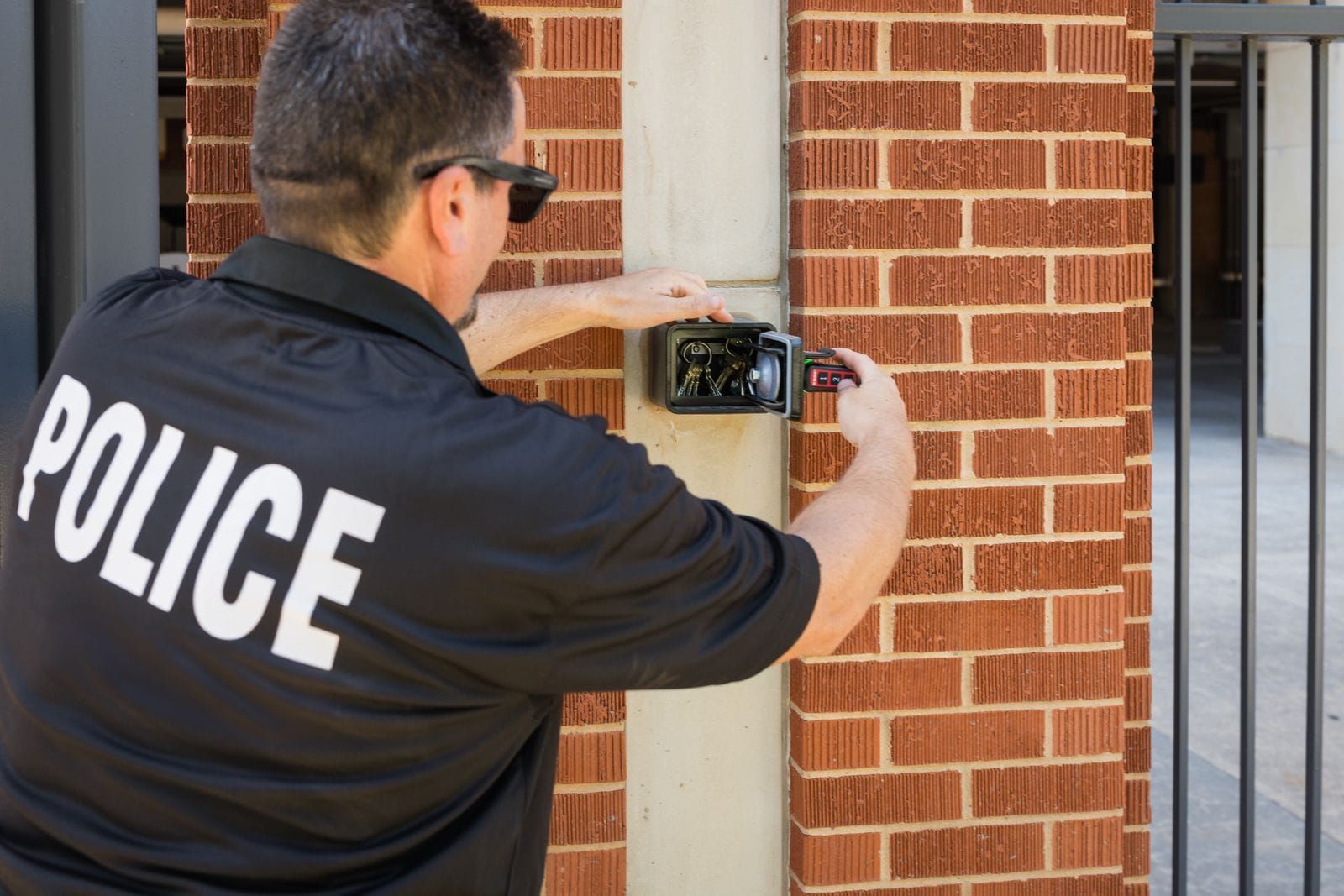
Few situations place greater pressure on law enforcement than responding to a school lockdown. Whether the lockdown is triggered by a report of a weapon, an online threat, suspicious activity near campus, or an unfolding act of violence, officers must make consequential decisions while information is incomplete and emotions are running high.
And what can make these situations worse? Inefficient access to the school facilities.
Lessons learned from the shootings at Marjory Stoneman Douglas High School and Robb Elementary School revealed major flaws when it comes to unlocked and unmonitored gates and doors, vulnerable building designs, and other access issues.
As a result, schools are adding locks and hardening their facilities in an attempt to keep the bad guys out.
While no one argues that keeping potential threats out is a good thing, the unintended consequence is that it can make it harder for first responders to get in when required. The results could be life-threatening response delays and increased property damage.
However, a response plan with emergency access for first responders can mitigate this challenge.
“The biggest issue when it comes to the issue of law enforcement access is complacency,” according to Dr. Kevin Eberle, CEO of Edingenuity, a safety and leadership consulting firm. “Access has been out of sight, out of mind. When it comes to ensuring access, complacency among school leadership puts people in danger. School administrators focus on standardized testing and student scores; when it comes to safety, they make student behavior a top priority but don’t consider catastrophic events or their consequences. Many teachers and students are concerned about safety, and we don’t look at the social and learning effects of stress and concern about safety and how they impact testing and grades.”
Eberle, a former COO and school principal from Buffalo, N.Y., believes that school leaders must adopt a “what if” mindset when it comes to response protocols.
“Before my tenure in education, I began my career as a police officer and a tactical team member responding to many emergency situations in Hampton (VA),” he noted. “I took that experience to consider things like: What would we all do if we heard an unknown loud noise right here, right now? What are the procedures in place? Call 911? Run, hide, and fight? Lock the doors? Even with procedures in place and practicing drills, emergency personnel need to get in. As a principal, we would practice tabletop exercises for the 'what if' scenarios, but we still needed to breach the procedures to let someone in.
“As a former police officer, I was placed in difficult situations when the need to enter buildings was stymied,” Eberle continued. “In most cases, forced entry was required. This could include breaking windows, using crash bars to force open doors, or, in barricaded situations, using battering rams. The result was that entry team members were placed in harm’s way when attempting to breach a building.”
According to Eberle, schools and public safety agencies should collaboratively develop emergency procedures that include law enforcement access rather than planning independently. School safety planning requires cooperation among schools, law enforcement, fire and emergency medical services, local government, families, and the broader community.
“The strongest response begins long before an emergency—with relationships, communication, planning, and a shared understanding of what everyone will do when seconds matter,” he noted.
Seconds Do Matter
“Does law enforcement have access when they need it and where they need it?” seems like an easy question.
However, the question is not that simple when a school is on lockdown, and you do not know which jurisdiction will respond first. At Robb Elementary, nearly 400 officers representing 24 different jurisdictions responded.
The consequences of delayed access can include:
- Seconds lost to destructive forced entry. While improved access will not prevent a shooting, it may help law enforcement neutralize a threat and accelerate care to those injured.
- Lockdown procedures are broken when administrators or managers leave their secured rooms to open doors for law enforcement.
- Lack of information forces responders to navigate buildings blindly after entry.
- Significant property damage, which can be costly to repair and may also provide an ongoing reminder of the trauma to students, teachers, and staff upon their return to school.
One of the systemic shortcomings of the Robb Elementary shooting exposed by post-event reports from the Texas House of Representatives and the U.S. Department of Justice was law enforcement access. The Texas House report documented significant delays as responders searched for a working master key, while the DOJ report recommended installing a key box for law enforcement access. A key box is a cost-effective solution that allows law enforcement one key to access all the schools within a district.
“The beauty of this common-sense approach is that it ensures consistency in emergency response across every school, providing a predictable and rapid access method for all first responders,” Eberle said. “A secure key box gives emergency personnel a quicker way to enter the building without placing them in dangerous situations.”
The Key Box and 'I Gave Police a Key' Myths
There are two primary mistakes schools make relating to access, according to Eberle.
“The first is that they say that they gave a key or cards to local police,” he said. “But does that include every single officer, including from the sheriff’s department or highway patrol who may be at the scene first? Does the provided key open both external and internal doors and locked gates? Are you sure the access card will work if it hasn’t been used in a while? Are all the keys and credentials to all the schools within one district the same, or will an officer have to take the time to search through a box of keys to find the right one for that specific school?”
Other than the “I gave the police a key” shortcoming, Eberle noted that virtually all school leaders he has spoken with believe that law enforcement has access to the key box at the front entrance of the school.
“In actuality, that box is for fire department use,” Eberle continued. “That box contains one key to get into the school at a location convenient for the fire department. That is not acceptable for law enforcement use.”
Eberle stresses the importance of the key box, which should contain all the critical information law enforcement may need, including facility layouts.
“The key box is not just a key repository; it is a vital bridge that allows emergency personnel to move directly from response to action,” he said.
Unlike the fire box at the front door, which may be in the shooter's line of sight, a law enforcement box can be placed at a strategic location to enable optimal tactical response. These locations could be at the front marquee of a school or by the gym entrance.
School campuses may contain multiple buildings, entrances, stairways, hallways, and gathering spaces. Responding officers may not be intimately familiar with the facility, making accurate information from school personnel and emergency plans especially important.
“The challenge for law enforcement is not simply responding quickly. It is also determining how to best mitigate the situation by knowing the layout of the facility and how to best locate the perpetrator,” Eberle said.
Several states, including Colorado, Louisiana, Texas, and Utah, require key boxes for law enforcement access. North Carolina requires schools to provide local law enforcement with either keys to the main entrance or emergency access to a key-storage device, such as a Knox Box. Other states have pending legislation.
Emergency Access Should Be Part of School Safety Planning
As schools continue to strengthen doors, gates, and other physical security measures, emergency access should be part of that planning. Keeping unauthorized individuals out and ensuring first responders can quickly get in when needed are not competing goals.
School leaders should consider the question before an emergency occurs: Does law enforcement have access when they need it and where they need it?
This article was contributed by Neal Zipser, Marketing and Communications Manager/Industry Affairs Manager for Knox Company.
Note: The views expressed by guest contributors are those of the authors and do not necessarily represent the views of, and should not be attributed to, School Security Leadership.