Matt Sherry: From SRO to Security Coordinator
Security Coordinator Matt Sherry shares how his experience in law enforcement prepared him to lead school safety initiatives in St. Cloud Area School District 742.

Editor’s Note: Our Member Spotlight series highlights NCSSD members and the important work they do to support safe and secure schools.
NCSSD Member Spotlight
Matt Sherry
Security Coordinator
District: St. Cloud Area School District 742
Years in School Safety: 10
About Matt
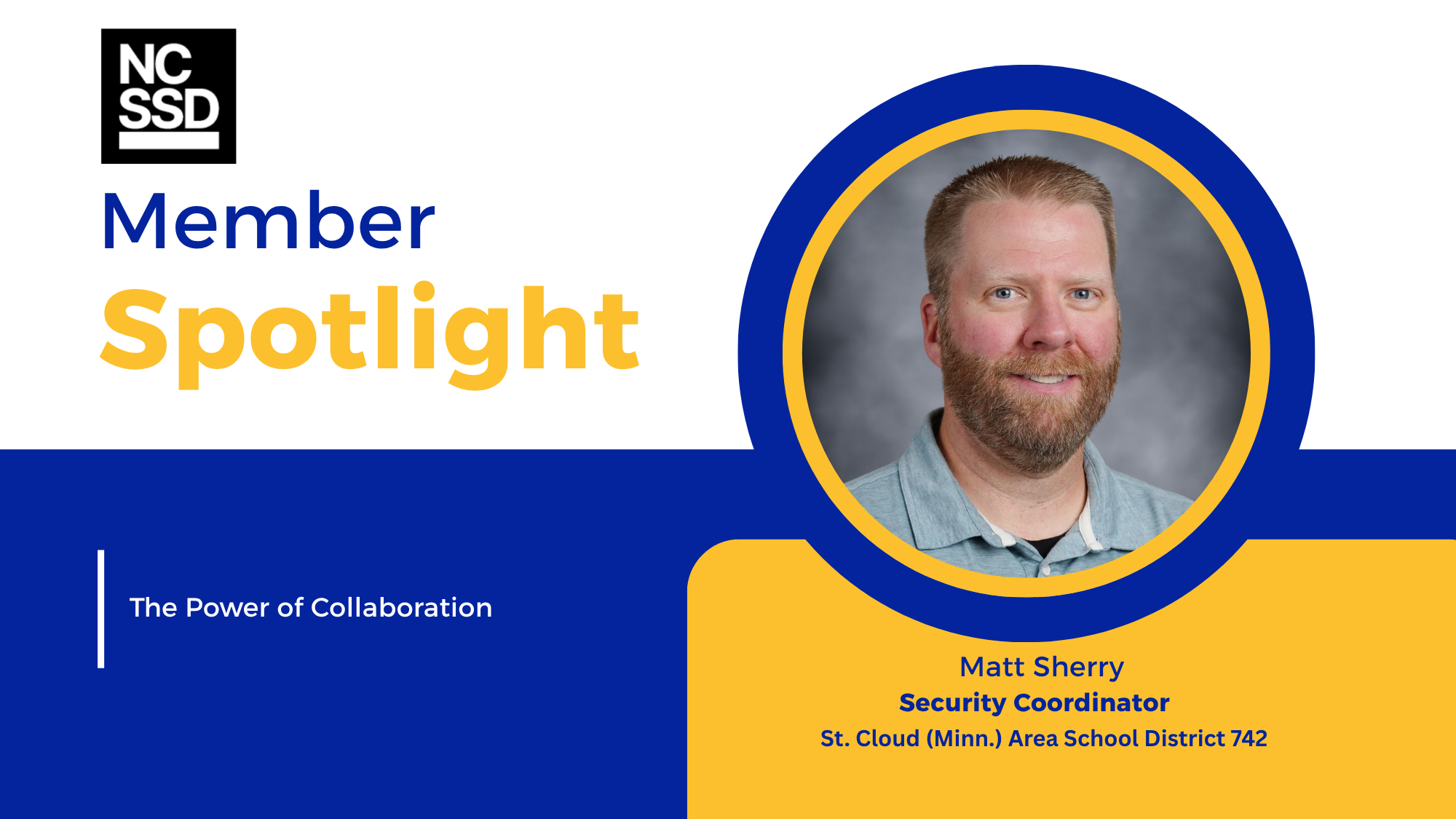
For this Member Spotlight, we spoke with Matt Sherry, Security Coordinator for St. Cloud Area School District 742 in Minnesota.
Before entering school safety leadership, Matt spent 22 years in law enforcement, serving as a patrol officer, field training officer, Crisis Intervention Team (CIT) officer, and instructor for defensive tactics and active shooter response. He also spent nine years as a school resource officer, an experience that sparked his passion for creating safer schools.
Today, Matt leads districtwide safety initiatives focused on emergency planning, physical security, response protocols, and building a culture of safety. We asked him about his path into school safety leadership, the accomplishments he's most proud of, and the advice he'd offer fellow school safety leaders.
Q: What led you to school safety leadership, and what motivates your work today?
For Matt, the transition from law enforcement to school safety leadership was a natural progression.
While serving as an SRO, he realized he could make an even greater impact by helping strengthen safety across an entire school district rather than serving a single campus.
"What motivates my work today is seeing the staff across my district embrace the changes I am implementing," Matt said. "Moving people to see that school safety and security is a culture has been very rewarding."
Q: What accomplishment are you most proud of?
Although Matt has led several significant initiatives, one of his earliest accomplishments was building support for an emergency notification application that had previously stalled because of organizational pushback. He also expanded the district's anonymous reporting system and helped guide the transition to the Standard Response Protocol (SRP), while emphasizing that staff retain the autonomy to make informed decisions based on the circumstances they face.
Related Reading
Building support for new school safety initiatives isn't always easy.
Explore how school safety leaders are gaining staff buy-in, strengthening leadership support, and building stronger school security cultures.
One accomplishment, however, stands out above the rest.
"My most proud moment came during this past school year when my team ran a successful family reunification after a school fire," Matt said. "This was a first in the history of our district. I couldn't be more proud of the way everyone from the students to the superintendent, and everyone in between, handled it."
Q: What are your top priorities right now?
Much of Matt's current work is focused on strengthening the district's emergency preparedness.
Current priorities include updating an Emergency Operations Plan that has not been revised since 2018, developing building-level crisis plans, installing panic buttons throughout the district, and preparing staff for the continued rollout of SRP.
Related Reading
Considering SRP or another options-based response model?
Explore how practitioners are implementing ALICE, Run Hide Fight, SRP, and other active threat response approaches.
ALICE, Run Hide Fight, or SRP? Practitioners Discuss Active Threat Response Training →
Upgrading door security remains one of the district's most significant ongoing challenges.
"Door locks remain a significant challenge, and finding workable solutions has been challenging," Matt said.
Q: What lesson or resource has had the biggest impact on your work?
One of the biggest lessons Matt has learned is the importance of continuous professional development.
"Attend as many conferences and trainings as possible," he said. "I have learned so much from networking, hearing speakers, reading after-action reports, and being a sponge."
Q: Why did you join NCSSD?
For Matt, one of NCSSD's greatest strengths is its network of experienced practitioners.
"I joined NCSSD because of the vast network it offers," he said. "The resources and connections from everyone with such knowledge, experience, and background has been excellent."
Matt believes school safety is fundamentally a collaborative profession.
"School safety and security is a community working toward a main goal of creating the safest environment for children to thrive and become contributing members of society."
Q: What future initiatives are you focused on?
Rather than continually introducing new initiatives, Matt's focus is on ensuring the district excels at the systems already in place.
"My future goals include becoming proficient with what we have right now," he said. "Between our response protocols, physical security, anonymous reporting, emergency notification, and culture, doing those things well is a goal."
Ultimately, Matt hopes every staff member has the tools, training, and confidence needed to help maintain a safe and secure learning environment.
Q: Any final thoughts for fellow NCSSD members?
Reflecting on the profession, Matt expressed appreciation for both the work being done by school safety leaders across the country and the support he has received within his own district.
"We all do excellent work in the world of school safety and security," he said. "I love my job, my district, and I am so lucky to have the support from my executive leadership team to create lasting and impactful work."
Know an NCSSD Member Making a Difference?
We're always looking to highlight school safety professionals from across the country. If you'd like to be featured or nominate a fellow NCSSD member, contact editor@ncssd.org.