Anonymous School Reporting Systems Raise Questions About Misuse, Data Security, and Response
New developments in Indiana, Florida, and Nevada highlight challenges involving anonymous school safety reporting, including misuse and data privacy.

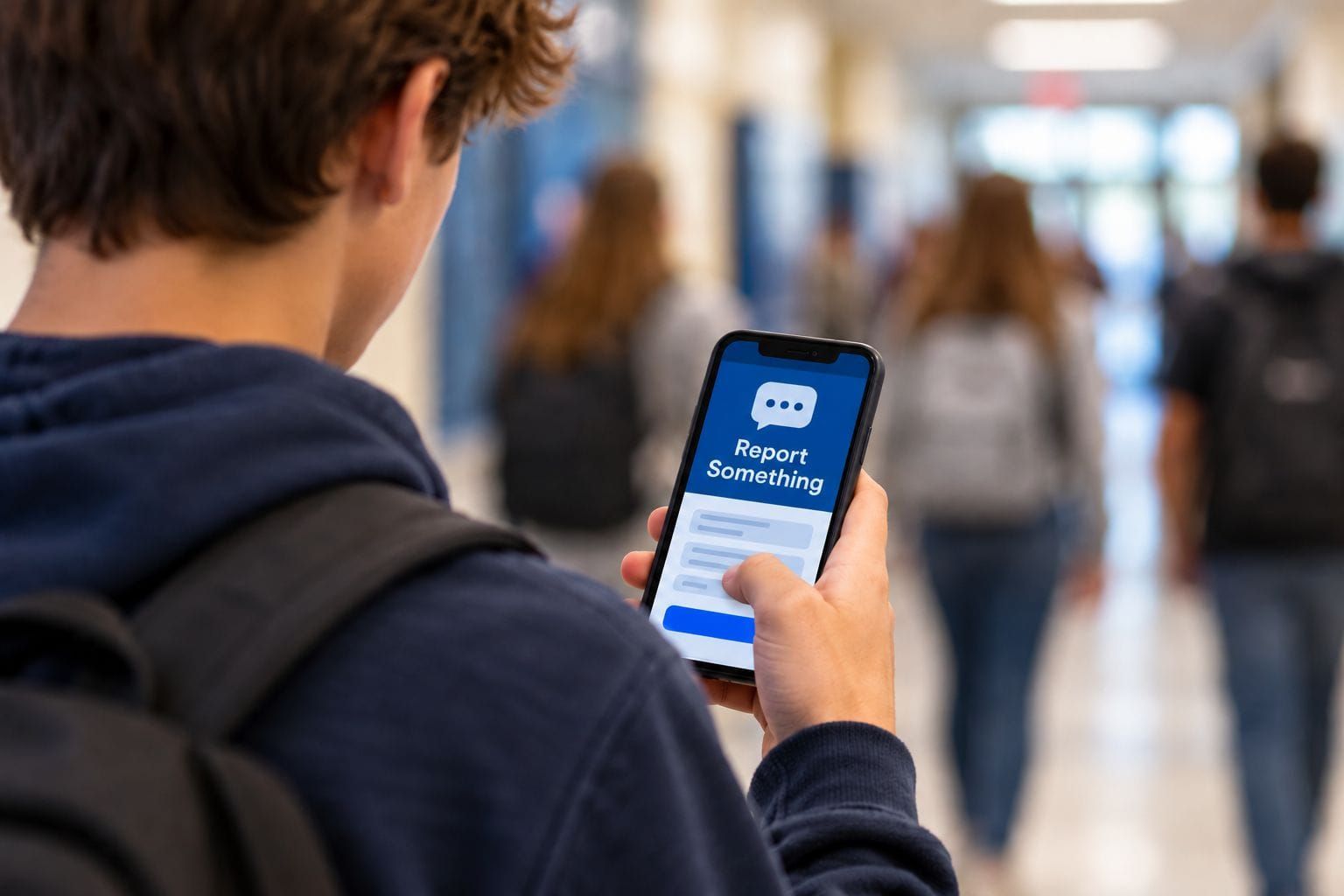
Anonymous reporting systems give students, families, and school staff a way to share concerns about threats, bullying, violence, or student well-being without publicly identifying themselves. But receiving a report is only the beginning. Schools also need to determine which reports require immediate attention, who should respond, and what happens next.
Recent developments illustrate both the potential value and the challenges of these systems. Colorado’s Safe2Tell program reported a record percentage of good-faith submissions, and Indiana is preparing to launch a statewide anonymous reporting program in January 2027. Meanwhile, a Florida investigation involving allegedly false reports and a cybersecurity breach affecting Nevada’s SafeVoice system highlight concerns about deliberate misuse and the protection of sensitive information.
Indiana Expands Access to Anonymous School Safety Reporting
Indiana Gov. Mike Braun announced in October a $1 million investment in a statewide anonymous reporting system intended to be available to all K-12 schools.
The program is expected to begin enrolling participating schools in January 2027. Participation will be optional, and schools will be able to access the service at no cost.
Students, staff, and families will be able to anonymously report concerns involving bullying, threats, violence, or individuals who may need assistance.
According to state officials, trained safety specialists will monitor reports around the clock, with urgent concerns escalated to designated school officials or emergency responders when necessary.
Encouraging Students to Speak Up About Safety Concerns
An October incident at Indianola High School in Iowa illustrates the importance of students feeling comfortable reporting safety concerns.
On Oct. 5, students reported that another student had a knife at the high school. Administrators, the school resource officer, and the Indianola Police Department investigated, and the knife was confiscated.
Authorities said there was no ongoing threat to students, staff, or the community. District and police officials credited the students who came forward with helping resolve the situation quickly.
Although the incident was not reported through an anonymous tip system, it highlights the importance of creating a school culture where students feel comfortable sharing concerns. Anonymous reporting systems provide another option, particularly for students who may be reluctant to approach a teacher, counselor, administrator, or other trusted adult directly.
Colorado Reports Record Share of Good-Faith Submissions
Colorado’s Safe2Tell program offers a broader look at how students and community members use anonymous reporting systems. According to its 2025-26 annual report, 97.6% of the program’s 29,302 reports were submitted in good faith—the highest percentage since consistent tracking began in the 2015-16 school year.
Deliberately false reports, submitted to mislead or cause harm, accounted for 1.8% of submissions. Misuse reports, which fall outside the program’s intended purpose, accounted for 0.6%. School safety, mental health, and bullying and harassment were the most frequently reported concerns.
Reports prompted more than 10,700 parent and guardian notifications, 3,600 welfare checks, and 5,100 connections to mental health support. Because a single report can prompt multiple interventions, these figures do not represent separate students or incidents.
FortifyFL Investigation Highlights Potential for Misuse
While anonymous reporting systems are intended to help schools identify legitimate safety concerns, they can also be deliberately misused.
In Florida, the Flagler County Sheriff's Office announced the arrest of a 16-year-old in October following an investigation into numerous allegedly false reports submitted through FortifyFL, the state's school safety reporting application.
According to investigators, reports submitted between Aug. 13 and Sept. 15 included allegations that students or family members were planning acts of violence. Authorities said the teenager submitted reports intended to provoke law enforcement responses at multiple schools and a residence.
One report alleged that a student had access to a firearm and had been instructed to carry out a shooting at an elementary school.
The sheriff's office said investigators spent more than 300 hours examining the reports and were reviewing additional incidents dating back to October 2025.
The case also illustrates how anonymous reporting systems can potentially be misused for swatting, in which someone deliberately makes a false emergency report to trigger a law enforcement response. As School Security Leadership previously reported, new federal guidance urges schools to coordinate with law enforcement, review their response protocols, and prepare for incidents involving false threats.
However, a report that turns out to be unfounded is not necessarily a deliberately false report. Students may share incomplete information, misunderstand something they witnessed, or report a concern they genuinely believe requires attention.
Nevada SafeVoice Breach Raises Data Privacy Concerns
In Nevada, state officials announced on Oct. 22 that a cybersecurity incident involving technology vendor Navigate360 had compromised information associated with the state's SafeVoice anonymous reporting system.
According to the Nevada Department of Education, a forensic investigation determined that approximately 10% of SafeVoice tips containing personally identifiable information were compromised. The vendor's cybersecurity incident occurred between November 2025 and March 2026.
The Washoe County School District's public notice identified potentially affected information as including student names, identification numbers, dates of birth, and medical information, depending on what was included in individual reports.
Officials said SafeVoice remains operational, with its hotline, mobile application, and online reporting form continuing to accept reports around the clock. The incident did not interrupt local dispatch operations, school response teams, or emergency response procedures.
However, the system's anonymous design has complicated efforts to notify affected individuals directly. Nevada officials said they cannot reliably identify everyone whose information may have been compromised without undermining the confidentiality protections associated with the reporting process.
State agencies are working with other education leaders and evaluating alternative platforms with enhanced security protections.
The breach highlights an important distinction. Even when someone submits a report anonymously, the information they share may identify students, families, or other individuals.
Questions for School Safety Leaders
The developments in Indiana, Florida, and Nevada raise several questions for schools using or considering anonymous reporting systems.
- Who monitors incoming reports, particularly outside school hours, and how are urgent concerns communicated to school officials?
- How do schools encourage students to report concerns while addressing deliberate misuse of reporting systems?
- What information is collected and stored, who can access it, and how is it protected?
- What responsibilities do outside vendors have when sensitive information is compromised?
As schools adopt or expand anonymous reporting systems, these current events underscore the importance of having clear procedures for reviewing and responding to tips, addressing deliberate misuse, and protecting the sensitive information shared through these platforms.