How Ohio Built a Mobile Surveillance Trailer Program for School Events
The Ohio School Safety Center shares how it developed its mobile surveillance trailer program and what school safety leaders should consider before investing in similar technology.

After-school activities and large campus events bring safety and security challenges that often look very different from a typical school day.
To help schools address those challenges, the Ohio School Safety Center (OSSC) created a statewide lending program that allows districts to borrow mobile camera trailers at no cost.
School Security Leadership spoke with Emily Torok, OSSC's executive director, about how the program was developed, the lessons learned during implementation, and what other school safety leaders should consider before investing in similar technology.
Why the Program Was Created
Torok said the program grew out of a larger effort to improve safety during after-school activities after the center began noticing recurring safety and security challenges during after-school programs, sporting events, and concerts.
OSSC paired the trailers with after-school preparedness training and free security and vulnerability assessments, making technology just one part of a larger safety strategy.
"We knew security equipment alone would not stop crimes and threats on campuses, but it can assist in the approach."
Building on Existing Knowledge
OSSC reviewed camera trailer equipment purchased through previous grants utilizing the Department of Homeland Security's Authorized Equipment List. The center then conducted a competitive bidding process to identify units that best met the program's needs.
At the time the initiative was developed, OSSC was part of the Ohio Homeland Security division, which already operated its own camera trailer program supporting critical infrastructure and special events. Lessons learned from that program helped shape the school-focused initiative.
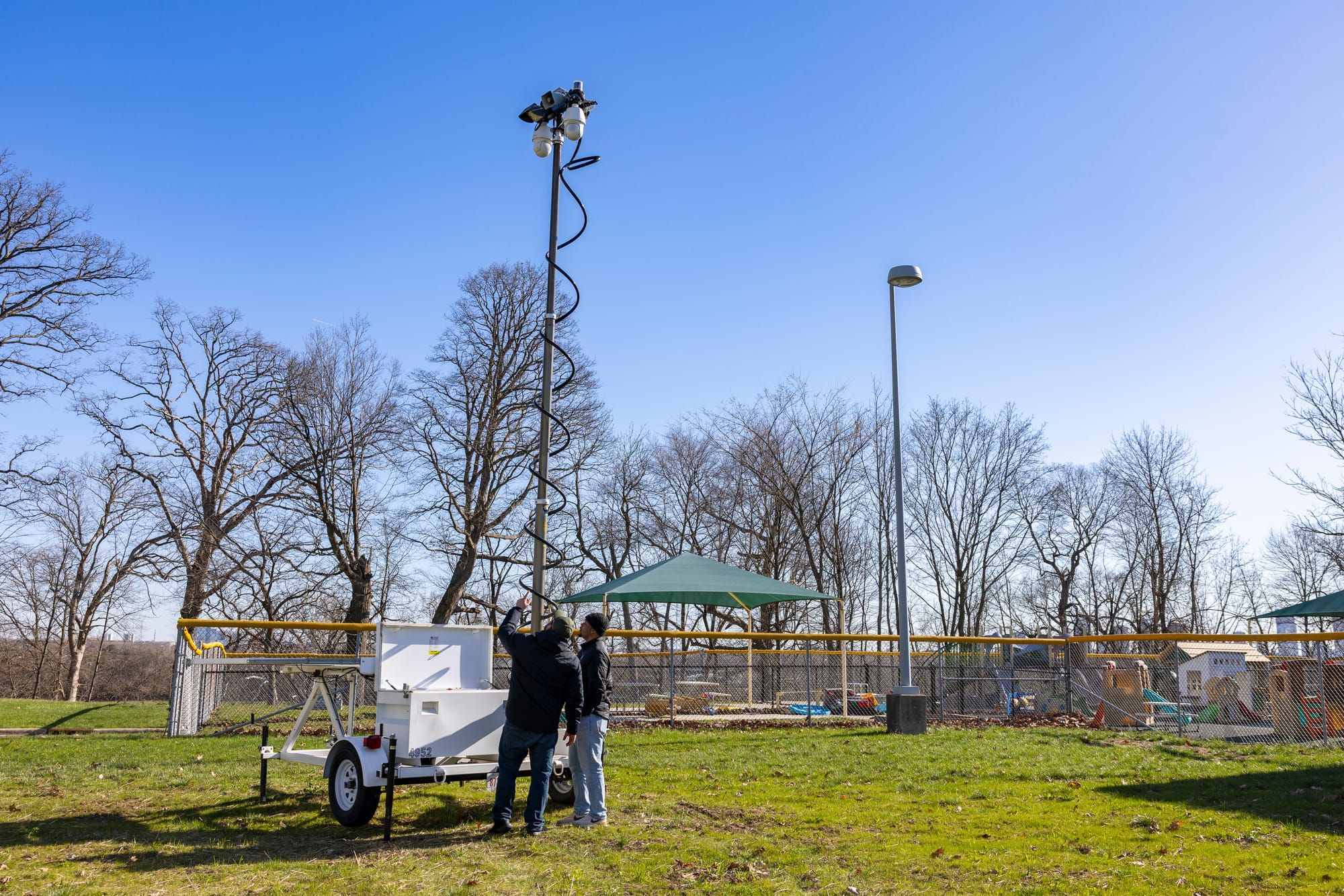
OSSC also wanted equipment that school personnel could deploy quickly with minimal technical expertise. The selected trailers were designed for s deployment, allowing staff to quickly set up the trailers and give local jurisdictions immediate access to camera feeds.
Filling in Gaps During Large Outdoor Events
Schools most commonly request the trailers for athletic competitions, outdoor graduation ceremonies, concerts, and other community events held on school property.
Many districts already have permanent camera systems, but outdoor venues often present unique coverage challenges and temporary surveillance needs.
"Many schools do not have exterior cameras for large outdoor gathering areas or may have blind spots in parking lots," Torok explained.
The trailers provide additional camera coverage while giving first responders direct access to live camera feeds during events. According to Torok, that capability strengthens coordination between schools and responding agencies by allowing personnel to monitor events even when they cannot be physically present in multiple locations at once.
The program has also prompted some schools to take a closer look at their long-term security infrastructure. After using the trailers during major events, several districts identified gaps in their existing camera coverage, requested updated security and vulnerability assessments, and began exploring grant funding for permanent camera improvements and other long-term security enhancements.
Mobile Surveillance Program Impact
Torok said schools and first responders have been highly receptive to the program, citing the added deterrence, expanded camera coverage, and improved situational awareness the trailers provide during large events. The ability for first responders to monitor live camera feeds has also strengthened coordination during events, while the visible security presence has helped build confidence among parents and community members.
With Technology Comes Operational Challenges
Despite the program's success, Torok said operating a mobile surveillance program involves much more than purchasing equipment.
During development, OSSC learned that sustaining a mobile surveillance program requires planning beyond the initial purchase. The center found that maintaining ongoing service contracts and ensuring replacement parts are readily available—particularly for components such as inverters that experience heavy field use—is critical.
Maintenance has been one of the program's biggest ongoing challenges. Agencies also need qualified electricians, along with the ability to safely transport, position, and secure the trailers at each deployment site.
OSSC has also incorporated multiple SIM cards into the trailers to improve cellular connectivity. Even so, Torok noted that agencies should understand where rural schools may still experience service gaps before relying on mobile technology.
Technology Requires People and Processes
Even the best technology depends on the people and processes that support it.
"Technology can never really replace a suspicious activity reporting program and a culture that supports identification, communication, and intervention of safety risks and threats," Torok said.
Surveillance technology only adds value when it's integrated into day-to-day security operations and is only as effective as the people monitoring and using it, she added.
If no one is actively monitoring camera feeds—or if footage isn't properly stored—the technology may have little value beyond investigating an incident after it occurs.
For Ohio's program, trained OSSC personnel monitor camera feeds during events while also conducting open-source social media monitoring, providing schools and first responders with an additional layer of situational awareness.
Start with a Security Assessment
For districts considering mobile surveillance technology—or any major security investment—OSSC recommends beginning with a comprehensive security and vulnerability assessment rather than shopping for equipment first.
Assessments conducted alongside local law enforcement can help schools identify no-cost, low-cost, and higher-cost improvements while determining whether technology is actually the best solution.
"Physical security enhancements alone are not the solution to keeping schools safe," said Torok.
OSSC recommends taking a layered approach to school safety, using technology as one component of a broader effort that includes planning, training, communication, and operational redundancies. Torok also pointed to the Partner Alliance for Safer Schools (PASS) Guidelines as one framework schools can use when developing that strategy.
Looking Beyond the Technology
For many schools, the camera trailers have become the starting point for larger conversations about after-hours emergency planning, staff responsibilities, communications, coordination with first responders, and overall preparedness.
OSSC noted that many after-school activities occur when administrators are no longer on campus, leaving coaches, club advisors, or other staff responsible for responding to emergencies without always having clear procedures in place.
By pairing technology with training, security assessments, and operational planning, OSSC said the initiative has encouraged schools to think beyond individual pieces of equipment and take a more comprehensive approach to after-hours safety.
Advice for Other States
For agencies interested in developing similar initiatives, OSSC recommends first determining whether they have the infrastructure to transport, maintain, and support mobile surveillance equipment over the long term.
Torok also suggested exploring partnerships with career and technical education programs, where students in electrical trades can gain hands-on experience while helping maintain equipment.
Before investing in technology, agencies should also engage schools to better understand whether after-hours activities and large events present security challenges that existing infrastructure cannot adequately address.