School Safety Leadership Requires Lifelong Learning
Why one school safety director says he will always be a student.
After working more than 25 years in law enforcement and security, I still constantly seek ways to learn more and collaborate with other professionals.
There is no better way to stay on top of issues or improve than to take part in professional development. It helps me stay on the forefront of my profession. It keeps me from becoming a stale professional who never questions whether there is a better or more creative way to enhance safety and security at our schools. Hopefully, it helps prevent me from ever asking if I could have done more to prevent a crisis.
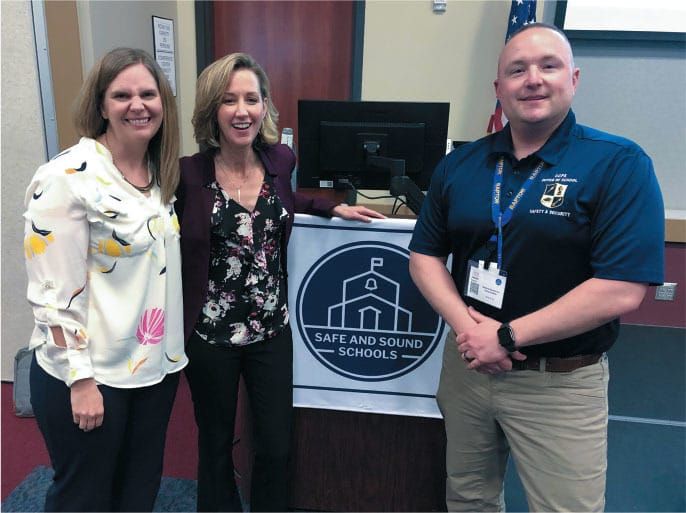
Years ago, the Association of School Business Officials (ASBO) awarded me the inaugural Josephine Gay Scholarship to attend the National Summit on School Safety hosted by Safe and Sound Schools, co-founded by Michele Gay and Alissa Parker. Hosted by parents whose lives were forever changed by school tragedy, the conference had a deep impact on the way I view school security. The lessons learned from tragedies like Sandy Hook and Columbine remain central to challenging attendees to think, grow, and continuously improve.
The conference focused on rethinking school safety and community building. Attendees collaborated, challenged each other, and frankly, shed tears as we explored the expansive tapestry of school safety. We listened to survivors’ stories, family members who lost loved ones, and experts from across the country. Breakout sessions included thoughtful discussions on subjects including bullying, brain health, physical security, school climate, and family reunification.
The return on my three-day investment to attend the National Summit on School Safety was incalculable. Each attendee left with an understanding of the complications and complexities associated with fostering and sustaining safer schools.
Sprinkled throughout every session was a message that still resonates: while there are no guarantees, we cannot stop trying.
Sprinkled throughout every session was what we later heard when former Columbine Prinicpal Frank DeAngelis said, "While there are no guarantees, we can’t stop trying." His statement captures why professional development is important. It reminds us the inverse is true: when we stop training and learning, we are guaranteed to fail. DeAngelis challenged us to ask every day how we are preparing our schools to meet today’s threats – and tomorrow's.
The desire to ask reflective questions requires maturity and emotional intelligence. Commitment to lifelong education ensures professionals avoid becoming stagnant. We all know colleagues who are successful but have stopped challenging themselves. If you hear statements like “back in my day,” “if it isn’t broke,” or “that’s the way we have always done it,” you are likely witnessing stagnation.
What we don’t know can hurt us; however, what we refuse to know can be far more damaging.
Lifelong education is about challenging what we know, not merely seeking confirmation bias. All professions evolve, but the pace of change in school security remains astonishing. Our operating environment has never been more complex, making professional development essential.
Charles County Public Schools Superintendent Dr. Kimberly Hill, my supervisor, once told me her fundamental leadership philosophy involved hiring the best people and trusting them to excel. Remaining the best, maintaining credibility, and being exceptional requires a commitment to continually gaining wisdom.
Our challenge today is promoting an environment where we are free to explore, try new things, possibly fail, and still thrive. This type of environment only occurs if there is an organizational and personal commitment to lifelong education. Learn a new idea, borrow it, and work it into the culture of your organization. Lastly, commit to being exceptional and at the top of your field.
Jason Stoddard is the Director of School Safety & Security for Charles County Public Schools in Maryland.